
Why Spinal Health Matters for Active Aussies
- Dr Nathan Bridger
- Dec 9, 2025
- 8 min read

Over 80 percent of Australian adults will experience back pain at some point, yet spinal health is about much more than discomfort. For every Australian who values an active, independent life, the spine plays a key role in movement, nerve function, and resilience. Understanding how spinal wellbeing supports daily routines and personal goals helps you make smarter choices, whether you are aiming for peak performance or simply want to stay pain-free for the long haul.
Table of Contents
Key Takeaways
Point | Details |
Spinal Health is Essential for Wellbeing | Maintaining optimal spinal function enhances overall movement, performance, and quality of life beyond just avoiding pain. |
Proper Alignment Improves Athletic Performance | Optimal spinal alignment enhances biomechanical efficiency, leading to better control, reduced injury risks, and faster recovery. |
Active Recovery is Crucial | Strategic movement and targeted rehabilitation are often more effective for managing back pain than complete rest. |
Invest in Proactive Care | Prioritising spinal health through regular assessments and strength training can build resilience and expand physical capabilities. |
What Spinal Health Means for Everyday Life
Spinal health is far more than just avoiding back pain - it’s about maintaining the central highway of movement and communication within your body. When your spine functions optimally, you’re not just preventing discomfort; you’re enabling peak physical performance and overall wellbeing.
For active Aussies juggling work, training, and family life, understanding spinal function means recognising how every movement connects. Your spine isn’t just a structural support - it’s a complex network that impacts nerve communication, muscle strength, and your body’s ability to adapt and recover. Spinal health services emphasise how critical mobility and independence are to quality of life, highlighting that proper spinal care goes beyond treating symptoms.
Consider how your spine influences daily activities: from lifting your kids to performing at the gym, from sitting at a desk to playing weekend sports. A well-aligned spine reduces injury risk, improves movement efficiency, and helps your body distribute physical stress more effectively. Chiropractors specialising in active lifestyles understand that spinal health is about creating resilience - giving your body the best possible foundation for whatever challenges you’ll face.
Active individuals who prioritise spinal health experience tangible benefits: improved flexibility, faster recovery, enhanced performance, and reduced long-term wear and tear. By treating your spine as a dynamic, interconnected system rather than just a collection of bones, you’re investing in a more robust, adaptable version of yourself. Whether you’re a tradie, an athlete, or a busy parent, understanding and maintaining spinal health is your secret weapon for staying strong, mobile, and pain-free.
How the Spine Supports Your Body and Sport
Your spine is far more than a structural pillar - it’s a dynamic, intelligent system that plays a crucial role in athletic performance and everyday movement. Every twist, turn, jump, and lift depends on your spine’s intricate network of bones, muscles, and nerves working in perfect synchronisation.
For athletes and active individuals, spinal biomechanics determine how efficiently your body transfers force and manages physical stress. Your spine acts as a central communication highway, transmitting nerve signals that control muscle activation, balance, and reflexive responses. Sports injury prevention strategies focus on maintaining optimal spinal alignment to reduce strain and enhance overall athletic resilience.

Understanding spinal mechanics reveals why proper alignment matters so much. When your spine is balanced, it allows for smoother, more powerful movements while distributing physical loads across muscle groups. This means reduced injury risk, improved range of motion, and faster recovery times. Whether you’re a weekend warrior or professional athlete, your spine determines how well you move, adapt, and perform under physical pressure.
Every sporting movement - from a cricket bowling action to a weightlifting squat - relies on spinal stability and mobility. A well-conditioned spine provides the foundation for strength, agility, and injury prevention. By viewing your spine as a dynamic, interconnected system rather than just a collection of vertebrae, you unlock potential for more efficient, powerful, and sustainable athletic performance.
Common Misconceptions About Back Pain and Injury
Back pain is complicated. Many Aussies believe that pain is a simple, straightforward signal when in reality, it’s a complex experience that doesn’t always reflect actual tissue damage or long-term risk. Understanding these nuanced dynamics can dramatically change how we approach spinal health and injury prevention.
One of the most persistent myths is that back pain always requires complete rest and immobilisation. Contrary to popular belief, ongoing research initiatives demonstrate that strategic movement and targeted rehabilitation are often more effective than prolonged inactivity. Active recovery, guided by professional advice, can actually accelerate healing and prevent muscle deconditioning.
Another widespread misconception is that back pain is an inevitable consequence of aging or physical activity. While some degree of wear is normal, most back issues stem from modifiable factors like poor movement patterns, muscle imbalances, and inadequate core strength. Active individuals who maintain proper biomechanics, engage in regular strength training, and seek proactive care can significantly reduce their injury risk and maintain spinal resilience.
Most critically, back pain isn’t a uniform experience that demands a one-size-fits-all approach. Each person’s spinal health journey is unique, influenced by individual biomechanics, lifestyle, and specific movement demands. By challenging these outdated myths and embracing a more nuanced understanding of spinal mechanics, you can transform your approach from reactive treatment to proactive performance enhancement.
Impact of Spinal Health on Athletic Performance
Athletic performance is fundamentally tied to spinal mechanics, with every movement originating from the central nervous system’s intricate communication network. Your spine isn’t just a structural support - it’s the critical highway that determines how efficiently your body generates, transfers, and absorbs physical forces during sporting activities.
Precision in movement starts with optimal spinal alignment. When your vertebrae, muscles, and nerves function harmoniously, you experience enhanced biomechanical efficiency - meaning more power, better control, and reduced energy waste. Role of chiropractic in sports highlights how strategic spinal care can unlock performance potential by improving nerve communication, joint mobility, and muscular recruitment patterns.
Every sport demands unique spinal adaptations. A cricket bowler requires different spinal mechanics compared to a CrossFit athlete or a long-distance runner. Understanding these nuanced requirements means recognising that spinal health isn’t about achieving a universal standard, but about optimising your body’s specific movement capabilities. Proper spinal function allows for smoother force transmission, more balanced muscle engagement, and faster recovery between intense training sessions.
Ultimately, athletic performance is a complex interplay of strength, flexibility, neurological coordination, and injury resilience - with your spine acting as the central orchestrator. By prioritising spinal health through targeted care, strength training, and biomechanical awareness, you’re not just preventing potential injuries, but actively enhancing your body’s capacity to perform at its absolute peak.
Risks of Ignoring Spinal Health Issues
Ignoring spinal health isn’t just about tolerating occasional discomfort - it’s a high-stakes gamble with your body’s fundamental movement system. What might seem like a minor twinge or persistent ache can quietly develop into complex, long-term biomechanical challenges that compromise your entire physical performance and quality of life.
Ongoing research initiatives demonstrate that chronic spinal neglect can trigger a cascade of progressive issues. Muscle imbalances develop, compensatory movement patterns emerge, and your body’s natural shock absorption mechanisms gradually break down. For active Aussies, this means reduced athletic capacity, increased injury susceptibility, and potentially permanent limitations in strength, flexibility, and overall functional movement.
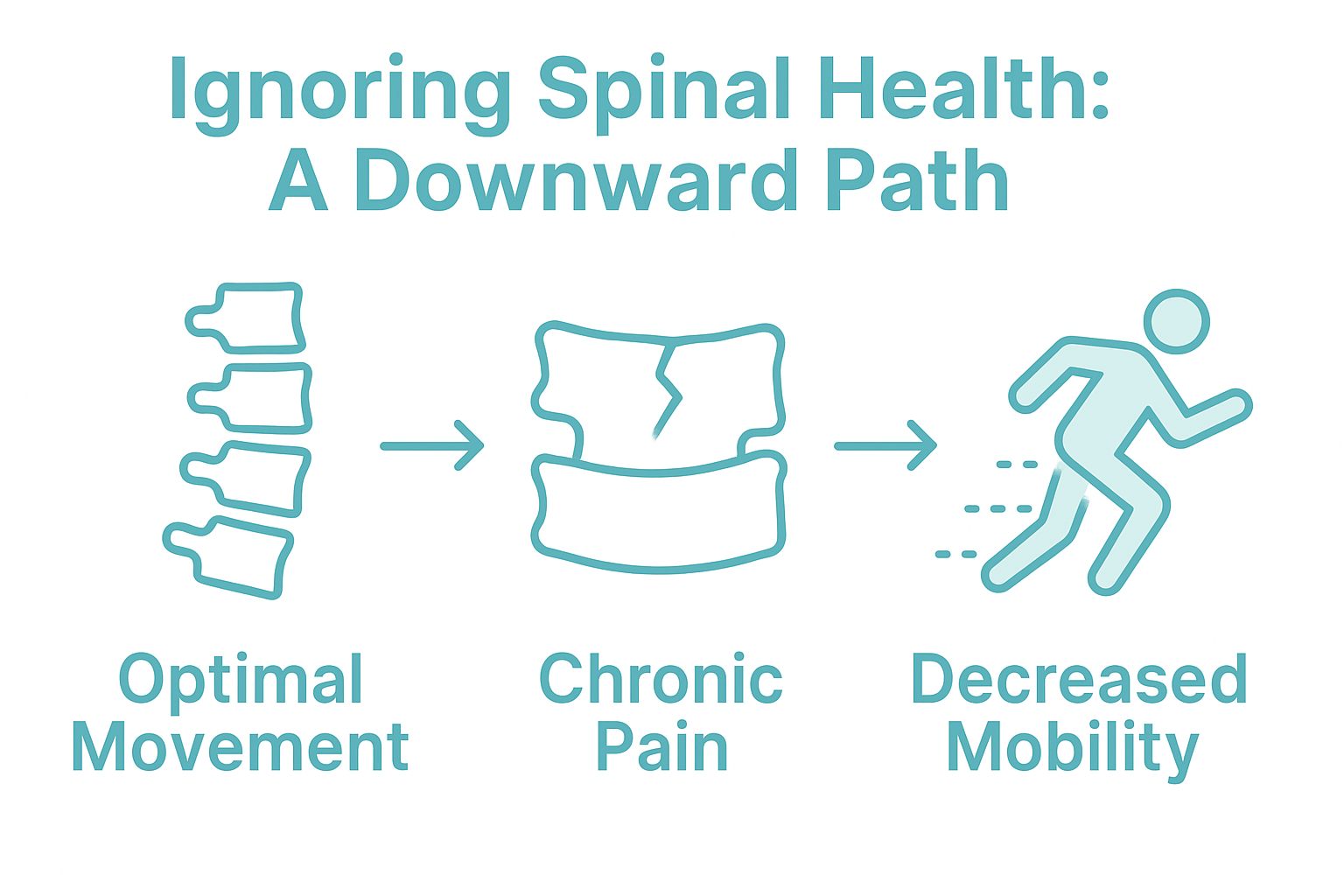
The risks extend far beyond immediate pain. Untreated spinal misalignments can lead to nerve compression, reduced joint mobility, and accelerated degenerative changes. Weekend warriors, tradies, and professional athletes alike face potential long-term consequences: chronic pain syndromes, reduced range of motion, decreased muscle recruitment efficiency, and a higher likelihood of serious injuries that could sideline you from the activities you love.
Perhaps most critically, spinal health isn’t just about physical mechanics - it’s about maintaining your body’s central communication network. When your spine isn’t functioning optimally, it impacts everything from muscular coordination to neurological signalling. By proactively addressing spinal health, you’re not just preventing pain - you’re protecting your body’s fundamental ability to move, adapt, and perform at its absolute best.
Building Resilience Through Proactive Care
Resilience isn’t something you’re born with - it’s something you intentionally build through strategic, consistent care. For active Aussies, spinal resilience means developing a body that can adapt, recover, and perform at high levels, regardless of the physical challenges you encounter.
Personalised therapy programs demonstrate that building spinal resilience is a holistic process involving targeted strength training, movement optimization, and biomechanical awareness. It’s about creating a body that doesn’t just react to stress, but anticipates and manages physical demands with efficiency and grace. This means developing muscular balance, improving nerve communication, and training your body to distribute physical loads more effectively.
Proactive care goes beyond traditional injury prevention. It’s a comprehensive approach that integrates strength conditioning, mobility work, regular chiropractic assessments, and mindful movement strategies. Active individuals who invest in their spinal health aren’t just avoiding potential injuries - they’re actively expanding their physical capabilities, reducing recovery times, and creating a more robust foundation for performance.
Ultimately, spinal resilience is about empowerment. It’s understanding that your body is a dynamic system capable of remarkable adaptation. By consistently investing in your spinal health through targeted exercises, professional guidance, and a proactive mindset, you’re not just protecting yourself from potential setbacks - you’re continuously upgrading your body’s potential to move, perform, and thrive.
Take Control of Your Spinal Health and Perform at Your Best
Understanding the importance of spinal health is the first step but taking action is what transforms pain and limitations into resilience and peak performance. If you are an active Aussie juggling daily demands or chasing athletic goals, addressing spinal function and alignment can help you move more efficiently, recover faster, and prevent injuries before they start. At North Fremantle Chiropractic, we specialise in hands-on, movement-based care that goes beyond symptom relief to build the spinal strength and biomechanical balance your body needs.
Don’t let spinal discomfort hold you back or let common misconceptions keep you from enjoying life and sport pain-free. Discover how our elite sports-focused chiropractic treatments combined with real-world strength and conditioning can help you stay strong, mobile, and resilient. Visit North Fremantle Chiropractic today to start your personalised journey toward lasting spinal health. Learn more about how we support active lifestyles and prevent injuries by checking out our role of chiropractic in sports and sports injury prevention insights. Your body deserves care that empowers you to perform at your absolute best.
Frequently Asked Questions
What is spinal health, and why is it important?
Spinal health refers to the optimal function and alignment of the spine, impacting nerve communication, movement efficiency, and overall wellbeing. Good spinal health is essential for preventing discomfort, enhancing physical performance, and ensuring resilience in daily activities.
How does spinal health affect athletic performance?
Spinal health directly influences athletic performance by ensuring optimal alignment and biomechanics, allowing for efficient force transfer and movement. A well-conditioned spine supports agile, powerful movements while reducing the risk of injury and enhancing recovery.
What are some common misconceptions about back pain?
Many people believe that back pain always requires complete rest or that it’s an inevitable part of ageing. In reality, strategic movement and rehabilitation can often alleviate pain, and many spinal issues can be prevented through good posture, strength training, and proper care.
How can I improve my spinal health?
Improving spinal health involves a combination of regular strength training, maintaining proper posture, engaging in flexibility exercises, and seeking proactive care from professionals like chiropractors. Building awareness of your body’s movements and investing in preventative measures can help enhance your spinal resilience.
Recommended