
7 Essential Core Strength Exercises List for Active Adults
- Dr Nathan Bridger

- Jan 4
- 10 min read
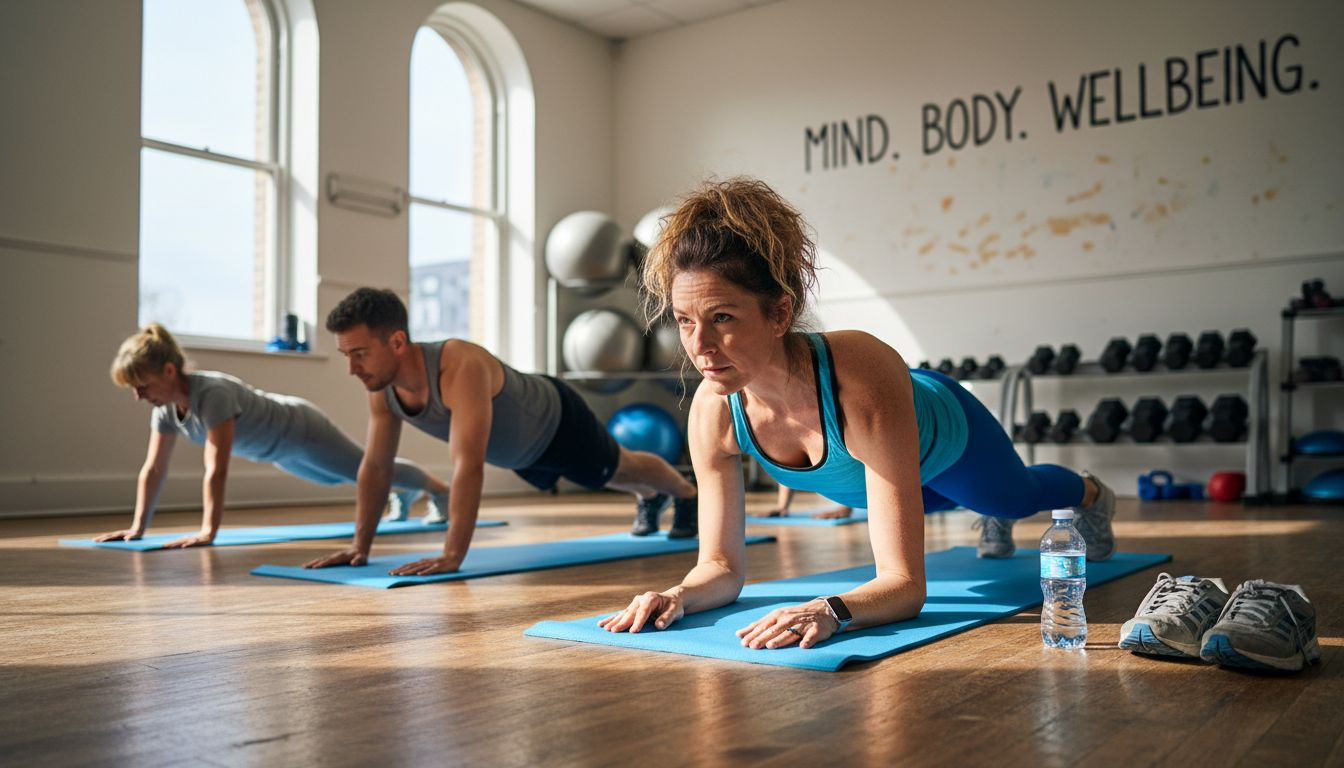
Most australian adults underestimate the impact core strength has on both daily movement and athletic performance. Whether you are training for local surf life saving in North Fremantle or pushing yourself in weekend soccer, a strong core is your secret weapon. Research shows core exercises reduce injury risk by up to 40 percent for active adults. Discover practical, proven techniques designed to help you move better, compete harder, and stay free from setbacks all year round.
Table of Contents
Quick Summary
Key Message | Explanation |
1. Master Plank Variations | Start with forearm planks for beginners, then explore dynamic variations to build core strength safely and effectively. |
2. Perfect the Dead Bug Exercise | This movement enhances core stability and coordination by challenging your body to keep a neutral spine while moving limbs. |
3. Incorporate Bird Dog for Balance | Training with the Bird Dog helps improve balance and core control, reducing injury risks and enhancing athletic performance. |
4. Strengthen with Glute Bridges | Engage your posterior chain, improve posture, and reduce back pain by performing Glute Bridges effectively. |
5. Utilize the Suitcase Carry | This functional movement trains your core to handle everyday loads while maintaining stability and preventing injury. |
1. Plank Variations for Beginners and Experts
Core strength is the foundation of athletic performance and injury prevention, and no exercise demonstrates this better than the mighty plank. Plank variations offer a versatile approach to building a rock solid core that works for everyone from weekend warriors to professional athletes.
At its core, a plank is about creating total body tension while maintaining a stable spine. Proper plank technique engages multiple muscle groups simultaneously, including your abdominals, back muscles, shoulders, and glutes. The standard plank position requires holding a push-up stance with your body forming a perfect straight line from head to heels.
For beginners, start with the classic forearm plank, which reduces shoulder strain and provides a stable base for learning. Keep your elbows directly under your shoulders, press your forearms firmly into the ground, and squeeze your core as if bracing for a light punch. Focus on maintaining a neutral spine by imagining a glass of water balanced perfectly on your lower back.
More advanced practitioners can explore dynamic plank variations that challenge stability and strength. Try side planks to target obliques, add leg lifts to engage hip flexors, or incorporate shoulder taps to test your balance and core control. Each variation builds functional strength that translates directly to athletic performance and daily movement patterns.
Pro tip: Start with 20-30 second hold times and progressively increase duration as your core strength improves, ensuring perfect form trumps longer duration every single time.
2. Dead Bug for Stability and Coordination
Not all core exercises are created equal, and the Dead Bug stands out as a powerhouse of neuromuscular coordination and stability training. This seemingly simple exercise offers profound benefits for core strength and movement control that extend far beyond traditional abdominal workouts.
Core stability is more than just having a six-pack. It involves intricate neuromuscular control that supports balanced movement and injury prevention. The Dead Bug exercise targets this complex system by challenging your body to maintain spinal position while moving limbs independently.
To perform the Dead Bug, start by lying on your back with your arms extended towards the ceiling and your legs bent at 90 degrees. Press your lower back firmly into the ground, creating a neutral spine position. Slowly extend one leg straight while simultaneously lowering the opposite arm overhead, keeping your core engaged and back pressed down.
This exercise is particularly beneficial for athletes, desk workers, and anyone looking to improve postural control. By training your nervous system to stabilise your spine during movement, you develop a more resilient and responsive core that supports everything from lifting weights to everyday activities.
Pro tip: Focus on slow, controlled movements and maintain constant contact between your lower back and the floor to maximise the exercise’s effectiveness and prevent compensatory movements.
3. Bird Dog to Improve Balance and Core Control
Imagine an exercise that trains your body to move with grace, stability, and precision all while building core strength. Enter the Bird Dog the unsung hero of functional movement training. This incredible exercise combines balance challenge with core stabilisation techniques that translate directly into real world athletic performance.
Neuromuscular coordination is the secret language of athletic movement, and the Bird Dog speaks it fluently. By challenging your body to maintain spine alignment while moving opposite limbs, this exercise trains your nervous system to create stability under dynamic conditions.
To perform the Bird Dog, start on your hands and knees with your hands directly under your shoulders and knees under your hips. Maintain a neutral spine position by imagining a glass of water balanced perfectly on your lower back. Slowly extend your right arm forward while simultaneously lifting your left leg straight back, keeping your hips square and your core engaged.
The beauty of the Bird Dog lies in its simplicity and profound impact. Weekend warriors, desk workers, and elite athletes alike can benefit from improved core control, reduced injury risk, and enhanced movement quality. By training your body to move with precision and stability, you build a foundation of strength that supports everything from lifting weights to chasing kids around the park.
Pro tip: Start by focusing on perfect form and holding each extended position for 3-5 seconds before alternating, gradually increasing duration as your stability improves.
4. Glute Bridge to Strengthen Posterior Chain
If you want to unlock your body’s true power and resilience, look no further than the mighty Glute Bridge. This seemingly simple movement is a game changer for posterior chain strength and overall body mechanics, targeting the powerhouse muscles that often get neglected in traditional workouts.
Posterior chain strength is the secret weapon of elite athletes and everyday fitness enthusiasts alike. By engaging gluteal muscles, hamstrings, and core simultaneously, the Glute Bridge builds functional strength that translates directly into improved performance and reduced injury risk.
To perform a perfect Glute Bridge, start by lying on your back with knees bent and feet flat on the ground. Place your arms by your sides, palms down. Engage your core and press through your heels, lifting your hips until your body forms a straight line from shoulders to knees. Focus on squeezing your glutes at the top of the movement and avoid arching your lower back.
This exercise is a game changer for desk workers, athletes, and anyone looking to improve their body’s fundamental movement patterns. By strengthening the posterior chain, you improve posture, reduce back pain, and create a more stable foundation for all physical activities from running to lifting heavy loads.
Pro tip: Experiment with single leg variations once you master the basic Glute Bridge to challenge your stability and increase muscle engagement.
5. Russian Twists for Rotational Strength
When it comes to core training, most people think up and down movements are the only way forward. Enter the Russian Twist a dynamic exercise that transforms your core training by introducing critical rotational strength.
Rotational core strength is more than just a fitness buzzword it is the secret sauce of athletic performance. This exercise specifically targets the obliques and develops the ability to generate power through twisting movements, which are fundamental in sports like tennis, golf, and Australian rules football.
To perform a Russian Twist, sit on the floor with your knees bent and feet slightly elevated. Lean back at a 45-degree angle, keeping your spine long and core engaged. Clasp your hands together or hold a weight at chest level. Rotate your torso from side to side, controlling the movement and maintaining balance without letting your feet touch the ground.
Athletes and fitness enthusiasts benefit immensely from Russian Twists because they mimic real world movements. Whether you are swinging a racquet, throwing a ball, or simply wanting to improve your body’s functional mobility, this exercise builds the rotational power that translates directly into everyday performance.
Pro tip: Start without weight and focus on perfect form before adding resistance progressively to avoid compromising technique.
6. Pallof Press for Anti-Rotation Power
Core training isn’t just about crunches and sit-ups. The Pallof Press is a game changing exercise that trains your body to resist rotation and build real functional strength.
Anti-rotation training challenges your body in ways traditional core exercises cannot. By forcing your core muscles to stabilise against external force, the Pallof Press builds incredible trunk stability and injury prevention mechanisms.
To perform a Pallof Press, stand perpendicular to a cable machine or resistance band anchor point. Hold the handle at chest height with both hands, feet shoulder width apart. Press the handle straight out in front of you while maintaining a rock solid, square stance. Your core muscles will work overtime to prevent your body from rotating towards the anchor point.
This exercise is a secret weapon for athletes, fitness enthusiasts, and anyone seeking to build a bulletproof core. Whether you are a tennis player, golfer, or simply want to protect your spine during everyday movements, the Pallof Press trains your body to generate and resist rotational forces with precision and control.
Pro tip: Start with lighter resistance and focus on perfect form maintaining a rigid torso throughout the entire movement.
7. Suitcase Carry to Develop Real-World Core Strength
Forgot about gym exercises that look good but serve no practical purpose. The Suitcase Carry is the ultimate functional movement that prepares your body for real life challenges.
Unilateral core training transforms how your body handles everyday stress and movement. By challenging your body to maintain stability while carrying weight on one side, this exercise mimics actual physical demands like carrying shopping bags or luggage.
To perform a Suitcase Carry, select a dumbbell or kettlebell and hold it on one side of your body. Stand tall with shoulders back and core engaged. Walk a set distance while keeping your torso perfectly upright, resisting the weight trying to pull you sideways. The key is maintaining a neutral spine and preventing your body from tilting towards the weighted side.
This exercise is a game changer for everyone from tradies lugging tools to parents managing multiple shopping bags. By training your body to resist lateral bending, you build incredible core strength that translates directly into preventing back injuries and improving overall movement efficiency.
Pro tip: Start with a lighter weight and focus on maintaining perfect posture, gradually increasing load as your stability improves.
Below is a comprehensive table summarising the key core exercises discussed in the article, including their purposes, techniques, and benefits for athletic performance and functional fitness.
Exercise | Purpose | Technique | Key Benefits |
Plank | Develop overall core strength | Maintain a straight push-up stance, engaging multiple muscle groups while holding stability. | Enhances core and back strength, promotes injury prevention. |
Dead Bug | Improve stability and neuromuscular coordination | Lie on your back, extending opposite arm and leg simultaneously while maintaining a neutral spine. | Builds controlled core strength, supports balanced movement. |
Bird Dog | Enhance balance and core control | Extend opposite arm and leg from an all-fours stance, keeping the spine neutral and core engaged. | Trains neuromuscular coordination and precision of movements. |
Glute Bridge | Strengthen the posterior chain | Lift hips from a lying position, ensuring a straight line from shoulders to knees. | Improves posture, strengthens glutes and hamstrings. |
Russian Twists | Build rotational core strength | In a seated position, rotate torso side-to-side, engaging obliques with or without resistance. | Enhances rotational mobility and power, beneficial for sports performance. |
Pallof Press | Develop anti-rotation core stability | Press a resistance band or cable forward while preventing torso rotation. | Improves core stability against external forces, reducing injury risk. |
Suitcase Carry | Train unilateral core strength | Carry a weight on one side while maintaining an upright posture, resisting lateral pull. | Strengthens obliques, enhances functional strength for daily movements. |
Build a Resilient Core and Move Pain Free with Expert Care
Struggling to maintain core strength and stability despite your best efforts with exercises like planks, bird dogs, or dead bugs? The challenge is not just working harder but working smarter with targeted support that complements your training. At North Fremantle Chiropractic, we understand the crucial role of core stability, neuromuscular control, and functional strength in helping active adults stay strong and injury free.
Our sports-focused chiropractic care combined with real-world strength principles is designed to help you move better, feel stronger, and perform at your best. Whether you want to perfect your glute bridges or master pallof presses, we empower you with hands-on treatment and guidance tailored to your goals. Ready to go beyond pain and build lasting resilience? Start your journey today at North Fremantle Chiropractic and discover how expert care transforms your core training into real life strength.
Explore what we offer and book your consultation to experience progress, not just treatment. Your body deserves the best support to keep doing what you love with confidence.
Frequently Asked Questions
What exercises can I do to improve my core strength as an active adult?
You can perform several effective core strength exercises, including Plank Variations, Dead Bugs, Bird Dogs, Glute Bridges, Russian Twists, Pallof Presses, and Suitcase Carries. Start incorporating these exercises into your routine, aiming for 2-3 sets per exercise, 2-3 times a week for noticeable improvements within a month.
How do I perform a proper Plank as a beginner?
To perform a Plank, lie face down, lift your body into a straight line from head to heels, and support your weight on your forearms and toes. Hold the position for 20-30 seconds, focusing on core engagement and maintaining a neutral spine, then gradually increase the duration as you gain strength.
What are the benefits of the Dead Bug exercise?
The Dead Bug exercise enhances core stability and neuromuscular coordination by challenging your body to maintain spinal position while moving limbs independently. Aim to do 2-3 sets of 10-12 repetitions to strengthen your core, improve movement control, and reduce injury risk.
How can I increase the difficulty of a Glute Bridge?
To increase the difficulty of a Glute Bridge, try incorporating single-leg variations once you master the basic movement. Start by raising one leg while holding the bridge position for 3-5 seconds, which will enhance your stability and strengthen your posterior chain further.
What is the purpose of the Suitcase Carry exercise?
The Suitcase Carry exercise develops real-world core strength by training your body to maintain stability while carrying a weight on one side. Perform this exercise by walking a set distance while keeping your posture upright; aim for 30-60 seconds per set to enhance stability and prevent back injuries.
Why is rotational strength important in core training?
Rotational strength is crucial for athletic performance as it supports movements in sports and daily activities that require twisting motions. Incorporate exercises like Russian Twists to specifically target your obliques, enhancing your ability to generate power through rotation and improving overall functional mobility.
Recommended
Comments