
Whole Body Health: Transforming Movement And Longevity
- Dr Nathan Bridger

- Dec 30, 2025
- 7 min read

More than half of Australian adults report struggling to maintain balance between movement, nutrition, and overall wellbeing. This challenge matters because neglecting even one area often leads to wide-ranging impacts across every body system, not just isolated symptoms. By exploring how interconnected health principles support resilience and sustainable performance, you will uncover practical ways to build lifelong habits that empower both physical and mental wellbeing.
Table of Contents
Key Takeaways
Point | Details |
Whole Body Health | View the body as an interconnected system to address health challenges holistically, considering movement, nutrition, recovery, and emotional wellbeing. |
Functional Resilience | Focus on movement quality and posture to build a strong foundation for health, reducing injury risk and enhancing performance. |
Nutrition and Recovery | Implement personalised nutritional strategies to support physiological recovery and sustainable performance, addressing both immediate and long-term needs. |
Overcoming Barriers | Identify personal obstacles and develop micro-strategies to transform health practices into rewarding experiences that align with life goals. |
Understanding Whole Body Health Principles
Whole body health is more than simply treating individual symptoms - it’s about understanding the intricate connections between different physiological systems and how they interact to support optimal human performance. Bond University’s research on human structure and function highlights the critical importance of viewing our body as an interconnected network rather than a collection of isolated parts.
At its core, whole body health recognises that every system in our body - from muscular and skeletal to nervous and connective tissues - works in a complex, integrated manner. When one area experiences stress or dysfunction, it can create cascading effects throughout other bodily systems. This holistic perspective means that addressing health challenges requires a comprehensive approach that considers movement, nutrition, recovery, and emotional wellbeing.
Key principles of whole body health include understanding biomechanical relationships, recognising the role of lifestyle factors, and adopting proactive strategies for maintaining physical resilience. This means looking beyond short-term pain management and instead focusing on sustainable practices that support long-term mobility, strength, and overall wellness. Movement isn’t just exercise - it’s a fundamental way our bodies communicate, adapt, and maintain optimal function.
Pro Tip - Integrated Health Check: Schedule regular assessments with healthcare professionals who understand whole body principles, such as chiropractors or physiotherapists, to identify potential imbalances before they develop into more significant issues.
Here’s a comparison of holistic vs traditional health approaches to clarify key differences:
Approach Type | Focus Area | Typical Strategies | Long-Term Outcome |
Whole Body (Holistic) | Interconnected body systems | Integrated movement, nutrition | Enhanced resilience |
Traditional | Isolated symptoms/systems | Symptom-specific interventions | Temporary relief possible |
Movement, Posture And Functional Resilience
Functional resilience is about more than physical strength - it’s a dynamic interplay between movement, posture, and the body’s ability to adapt and recover. Research from Fortem Australia highlights how regular physical activity builds the body’s capacity to manage stress and challenges, demonstrating that movement is a critical foundation for overall health and performance.

Posture plays a fundamental role in functional resilience, acting as the structural framework that supports efficient movement patterns. The way we hold and move our body directly impacts our muscular strength, joint mobility, and neurological communication. Yoga practices emphasise the importance of natural movement patterns that restore optimal alignment, enhance mobility, and create a more balanced muscular system.
Building functional resilience requires a holistic approach that integrates multiple movement strategies. This means developing strength across different planes of motion, improving flexibility, and training the body to respond effectively to varying physical demands. By focusing on movement quality over quantity, individuals can create a robust physical foundation that supports long-term health, reduces injury risk, and enhances overall performance in daily activities and athletic pursuits.
Pro Tip - Movement Assessment: Regularly video record yourself performing basic movement patterns like squats, lunges, and push-ups to objectively assess your posture and identify potential imbalances that might require targeted intervention.
Nutrition, Recovery And Sustainable Performance
Sustainable performance is fundamentally linked to understanding how nutrition supports physiological recovery and adaptation. La Trobe University’s research on human nutrition principles reveals the critical importance of macronutrient and micronutrient balance in supporting metabolic processes that drive long-term athletic and everyday performance.
Nutrition acts as a foundational pillar for recovery, providing the body with essential building blocks to repair tissue damage, replenish energy stores, and support neurological function. This means moving beyond simple calorie counting and understanding how different nutrients interact to support cellular repair, hormonal balance, and immune system resilience. Protein synthesis, glycogen restoration, and inflammation management are key processes that directly impact an individual’s ability to maintain consistent performance and reduce injury risk.
A holistic approach to nutrition and recovery requires personalised strategies that adapt to individual metabolic needs, training intensity, and lifestyle demands. This involves carefully timing nutrient intake, understanding the body’s unique response to different food groups, and creating a sustainable eating pattern that supports both immediate energy requirements and long-term physiological adaptation. By integrating precise nutritional interventions with adequate rest and strategic movement, athletes and active individuals can develop a robust system of sustainable performance.
Pro Tip - Nutritional Tracking: Keep a detailed food and performance journal for 30 days to identify how specific nutritional choices correlate with your energy levels, recovery speed, and overall physical performance.
Common Barriers And How To Overcome Them
Time constraints and motivation challenges are the most prevalent obstacles preventing individuals from maintaining consistent health and movement practices. Fortem Australia’s research on movement resilience highlights that overcoming these barriers requires strategic, personalised approaches that acknowledge individual lifestyle demands and psychological triggers.
Psychological barriers often manifest as internal narratives that limit our perceived potential for change. These might include deep-seated beliefs about fitness, past unsuccessful experiences, or misconceptions about what effective movement and health practices actually entail. Breaking through these mental barriers requires a combination of realistic goal-setting, incremental progression, and developing a growth mindset that views challenges as opportunities for personal development rather than insurmountable obstacles.
Practical strategies for overcoming common health and movement barriers involve creating flexible, adaptable systems that integrate seamlessly into existing lifestyles. This means designing short, efficient movement routines, leveraging technology for tracking and motivation, finding enjoyable physical activities that don’t feel like traditional exercise, and building supportive social networks that encourage consistent progress. The key is transforming health practices from external obligations into intrinsically rewarding experiences that align with personal values and life goals.
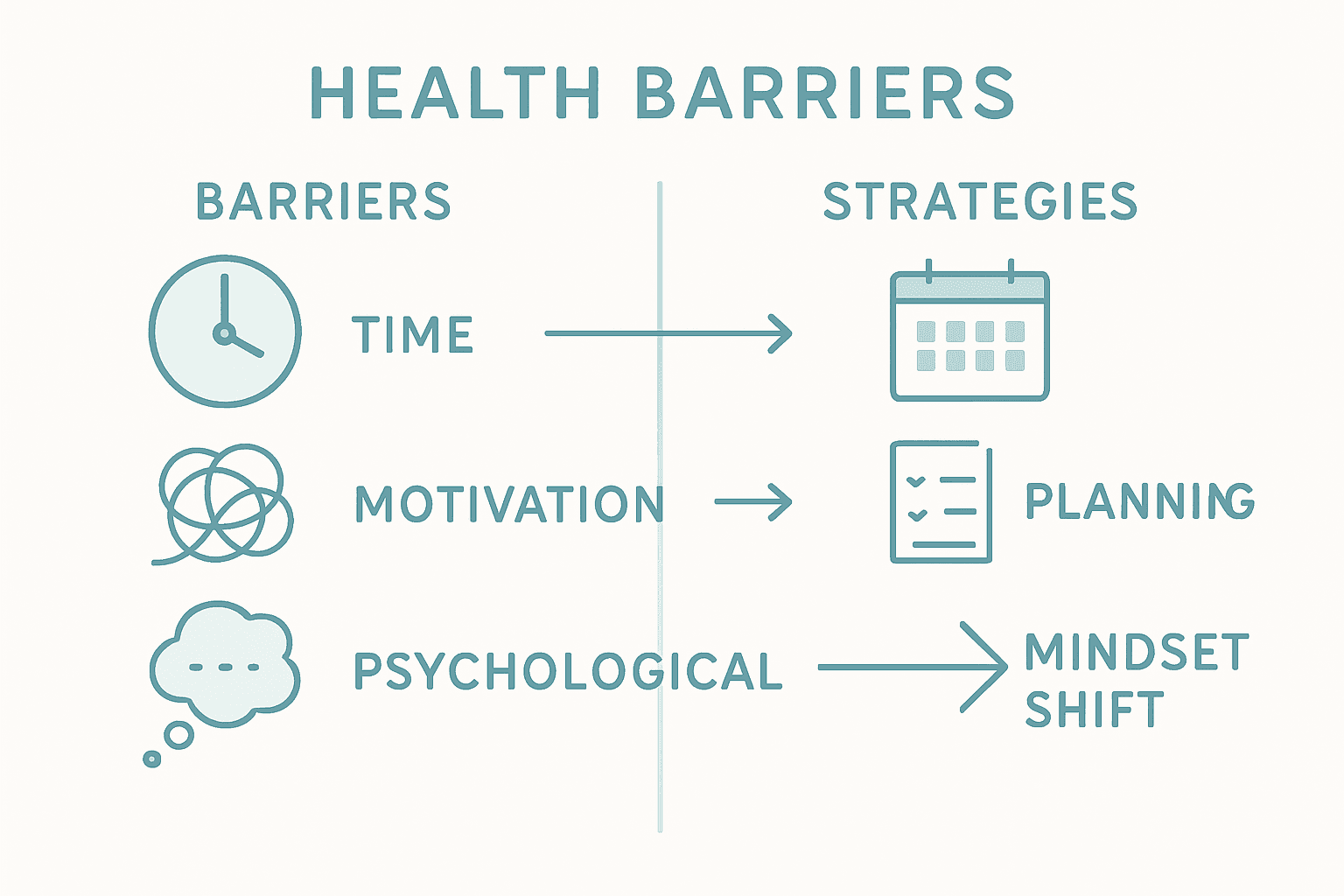
Pro Tip - Barrier Mapping: Spend 15 minutes documenting your specific barriers to health and movement, then develop three targeted micro-strategies for each obstacle that make progress feel achievable and engaging.
Building Long-Term Habits For Better Wellbeing
Habit formation is a complex neurological process that requires consistent, intentional practice and strategic approach. Fortem Australia’s research on movement resilience emphasises that sustainable wellbeing emerges from creating repeatable, meaningful routines that align with personal values and lifestyle dynamics.
Successful long-term habit development involves understanding the psychological mechanisms that drive behavioural change. Yoga practices demonstrate how mindful, consistent movement can transform physical and mental patterns, revealing that sustainable habits are built through incremental, enjoyable experiences rather than forced, punitive approaches. This means designing health practices that feel intrinsically rewarding, create positive neurological feedback loops, and gradually reshape individual movement and lifestyle patterns.
Practical strategies for embedding lasting habits include micro-progression, environment design, and developing a flexible mindset that celebrates small wins. This involves breaking complex health goals into manageable daily actions, creating physical and digital environments that subtly encourage desired behaviours, and cultivating self-compassion that allows for adaptation and continuous learning. The most resilient habits emerge when individuals view health as a dynamic, evolving journey rather than a rigid destination.
To support practical habit-building, here’s a summary of effective strategies and their main benefits:
Strategy | How It Works | Key Benefit |
Micro-progression | Small daily actions towards big goals | Limits overwhelm, builds momentum |
Environment design | Change surroundings to cue behaviour | Increases consistency |
Habit stacking | Attach new habit to existing routine | Makes new behaviours feel natural |
Pro Tip - Habit Stacking: Attach new health behaviours to existing reliable daily routines, creating natural triggers that make consistent practice feel seamless and intuitive.
Take Charge of Your Whole Body Health Today
The journey to lasting wellbeing and functional resilience begins with recognising the interconnected nature of your body’s systems. If movement limitations, persistent pain, or challenges in building long-term healthy habits are holding you back from doing what you love, it is time to explore a tailored, hands-on approach designed to help you move better, recover smarter and perform stronger. At North Fremantle Chiropractic, we understand the importance of addressing biomechanical imbalances and lifestyle factors that impact your whole body health.
Discover how our elite sports-focused chiropractic care combined with real-world strength and conditioning can transform your movement and longevity. Don’t settle for temporary fixes. Take the first step towards building true physical resilience by visiting North Fremantle Chiropractic. Explore our expert care methods and start your personalised journey to enhanced mobility and sustainable performance today at https://northfremantlechiropractic.com.au. Ready for results that last? Learn more and book your initial assessment now.
Frequently Asked Questions
What is whole body health?
Whole body health is a holistic approach that views the body as an interconnected system, recognising that different physiological systems work together to support overall health and performance.
How does movement contribute to long-term health?
Movement is essential for functional resilience and physical health, promoting effective communication between muscles and joints while reducing the risk of injury and enhancing overall performance.
What role does nutrition play in recovery and performance?
Nutrition provides essential nutrients that support recovery, repair tissue damage, and replenish energy stores, contributing to improved athletic performance and overall physical wellbeing.
How can I overcome barriers to maintaining a health routine?
Identifying specific barriers and developing micro-strategies tailored to personal lifestyle can help integrate health practices into daily life, transforming them into enjoyable and achievable experiences.
Recommended
Comments