
7 Strength Training Tips for Busy Fremantle Parents
- Dr Nathan Bridger

- Dec 30, 2025
- 9 min read
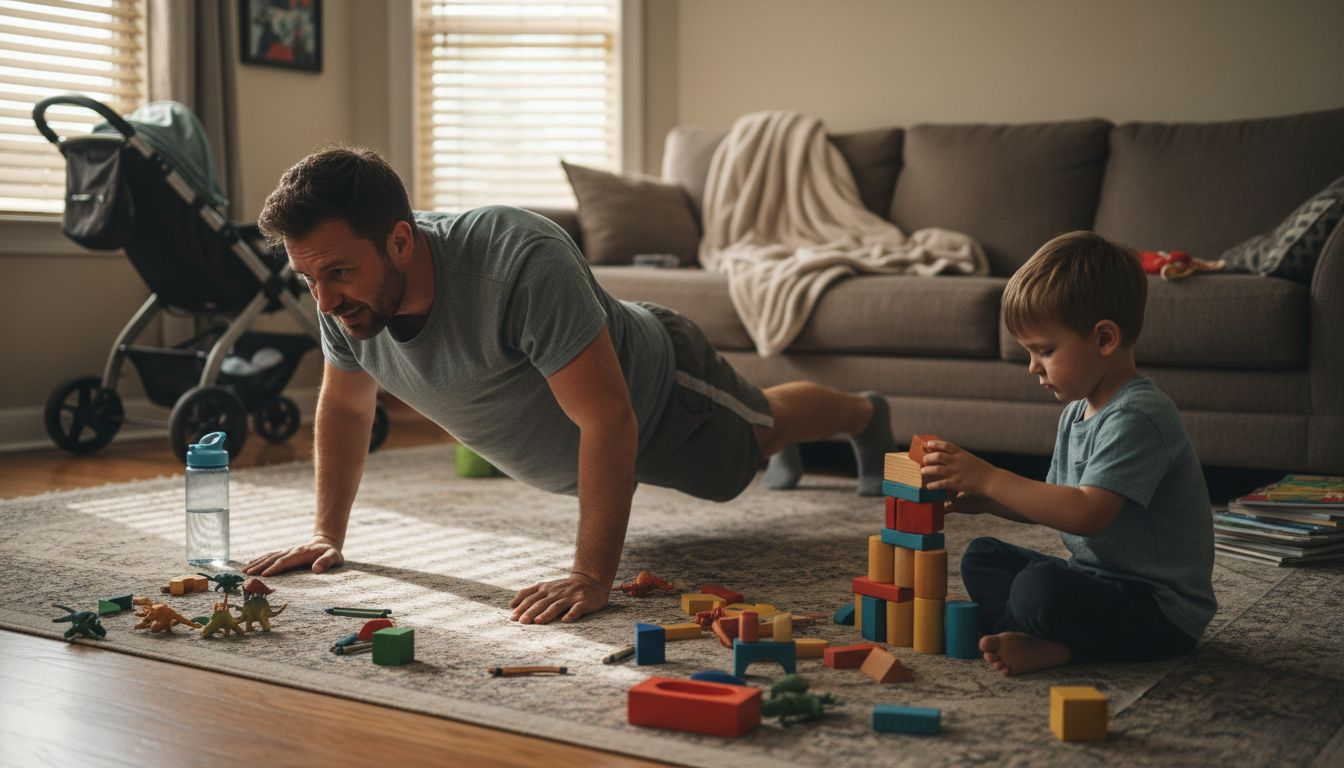
Most parents in Fremantle and surrounding suburbs like Cottesloe, Bicton and Palmyra find that busy family schedules leave little room for gym time or lengthy workouts. Balancing childcare, work, and daily stress can feel overwhelming, yet just 15 minutes of home exercise can greatly improve physical resilience and mood. Discover approachable strength training strategies designed for your lifestyle, so you can build strength, boost energy, and manage stress right from your living room without sacrificing family time.
Table of Contents
Quick Summary
Takeaway | Explanation |
1. Start with Bodyweight Exercises | Bodyweight exercises like squats and push-ups are effective and can be done at home without equipment. |
2. Focus on Full-Body Workouts | Prioritize full-body exercises for maximum efficiency, engaging multiple muscle groups in limited time. |
3. Use Short, High-Intensity Workouts | Short workouts like HIIT can provide significant benefits; aim for 15-20 minutes of focused effort. |
4. Maintain Proper Form | Correct technique is essential to prevent injuries and ensure effective strength training. |
5. Involve Your Kids in Workouts | Make exercise fun by incorporating playful activities with your children, turning fitness into family time. |
1. Start with Simple Bodyweight Movements at Home
Strength training doesn’t require a gym membership or fancy equipment. For busy North Fremantle parents, bodyweight exercises offer a perfect way to build strength right in your living room. The Australian Institute of Fitness offers mini workouts specifically designed for parents juggling family responsibilities.
Bodyweight movements leverage your own body weight as resistance, making them incredibly accessible and effective. Exercises like squats, push-ups, lunges, and planks engage multiple muscle groups simultaneously, providing a comprehensive workout that builds functional strength. These movements mimic real-world actions like lifting children, carrying groceries, or playing with kids.
Key bodyweight exercises for parents include:
Squats: Strengthen legs and core, improve mobility
Push-ups: Build upper body and chest strength
Lunges: Enhance leg stability and balance
Planks: Develop core strength and improve posture
The beauty of bodyweight training is its flexibility. You can perform these exercises during naptime, while supervising playtime, or in short 10-minute windows throughout your day. Start with 2-3 sets of 8-12 repetitions, focusing on proper form rather than speed or quantity.
Pro tip: Create a dedicated ‘workout zone’ in your home where you can quickly drop and do a few exercises. Even small, consistent efforts will build significant strength over time.
2. Focus on Full-Body Exercises for Maximum Impact
When time is scarce, full-body exercises offer the most efficient path to strength training for busy North Fremantle parents. Tom’s Guide highlights a powerful 25-minute bodyweight workout that maximises muscular effort without needing specialised equipment.
Full-body exercises engage multiple muscle groups simultaneously, delivering superior fitness results compared to isolated movements. These comprehensive exercises not only build strength but also improve coordination, balance, and overall functional fitness. By recruiting more muscle fibres in each movement, you burn more calories and enhance metabolic performance.
Top full-body exercises that deliver maximum impact include:
Burpees: Combines cardio and strength training
Mountain climbers: Targets core, shoulders, and legs
Bear crawls: Develops total body stability and strength
Thrusters: Integrates lower and upper body muscles
The key is performing these exercises with proper form and controlled movements. Start with 3 sets of 8-12 repetitions, focusing on maintaining good technique rather than speed. As your fitness improves, you can increase repetitions or add complexity to the movements.
Full-body workouts are perfect for parents who need efficient, time-effective training. They require minimal space, no equipment, and can be adapted to your current fitness level.
Pro tip: Design a circuit of 4-5 full-body exercises and rotate through them with minimal rest to maximise workout intensity and time efficiency.
3. Use Short, Efficient Workouts to Save Time
Busy North Fremantle parents know that finding time for fitness can feel impossible. Get Active Victoria offers brilliant 10-minute online workouts that prove you do not need hours to stay strong and healthy.
Short workouts are scientifically proven to deliver significant fitness benefits when structured intelligently. The key is intensity and purposeful movement. By focusing on efficient circuit training and high-intensity intervals, you can achieve remarkable results in minimal time. Australian Sports Nutrition recommends circuit training that can be completed in just 20 minutes, making fitness achievable for even the most time-pressed parents.
Effective short workout strategies include:
High-intensity interval training (HIIT)
Circuit training with minimal equipment
Bodyweight exercise sequences
Tabata style workouts
The beauty of short workouts lies in their flexibility. You can perform these during naptime, early morning, or even while supervising children. Aim for 15 to 20 minutes of concentrated effort, focusing on full-body movements that maximise muscle engagement and metabolic impact.
Consistent short workouts are far more beneficial than sporadic long sessions. Quality always trumps quantity when it comes to strength training. By maintaining a regular routine of efficient exercises, you can improve strength, boost metabolism, and maintain energy levels.
Pro tip: Prepare your workout space the night before and select your exercise sequence in advance to eliminate decision fatigue and maximise your limited workout time.
4. Prioritise Proper Form to Prevent Injury
Strength training is not just about how much you lift, but how you lift. Understanding the hidden factors behind injury prevention can transform your fitness approach from risky to resilient.
Woman & Home emphasises the critical importance of maintaining proper exercise form, particularly for parents balancing fitness with family responsibilities. Correct technique protects your body from unnecessary strain, reducing the risk of long-term damage and ensuring sustainable strength development.
Key elements of maintaining proper form include:
Alignment: Keep your spine neutral
Control: Move slowly and deliberately
Breathing: Maintain consistent breath rhythm
Engagement: Activate core muscles during movements
Practical form assessment involves watching your movements in a mirror, recording short video clips, or working with a fitness professional who can provide immediate feedback. Tom’s Guide recommends focusing on precise movements rather than speed or repetition count, especially when performing complex exercises.
Remember that proper form often means reducing weight or repetitions to maintain technique. It is better to perform 5 perfect repetitions than 15 sloppy ones that risk injury.
Pro tip: Before each workout, spend 5 minutes warming up and practising the specific movements with no weight to ingrain correct muscle memory and movement patterns.
5. Incorporate Playful Workouts with Your Kids
Get Active Victoria champions the idea of transforming fitness into family fun, proving that strength training doesn’t have to be a solitary, serious endeavour. By turning exercise into a playful family activity, parents can simultaneously boost their fitness and create lasting memories with their children.
Incorporating kids into your workout routine offers multiple benefits. Not only does it solve the childcare challenge during exercise, but it also models healthy lifestyle habits and makes fitness feel like play rather than work. Children naturally move with enthusiasm, making them perfect workout partners who can inject energy and spontaneity into your training.
Creative family fitness activities include:
Backyard obstacle courses
Dance party fitness sessions
Bike rides after dinner
Tag and chasing games
Animal movement challenges
Mr. Treadmill recommends integrating after dinner family walks or bike rides as an effortless way to combine family time with physical activity. The key is maintaining a sense of playfulness and avoiding rigid structure that might discourage children from participating.
Think of these activities as movement adventures rather than structured workouts. Some days, your fitness might look like a spontaneous dance party, other days a competitive game of backyard tag. The goal is consistent movement and shared joy.
Pro tip: Create a weekly family fitness challenge with small rewards to keep everyone motivated and engaged in active play.
6. Recover Well with Stretching and Mobility
Recovery is not a luxury for busy parents it is a necessity for sustainable fitness. Conditioning strategies play a critical role in building lasting resilience after intense strength training workouts.
Woman & Home highlights the power of a 15-minute Pilates workout for improving flexibility and core strength, which are essential elements of effective recovery. Stretching and mobility work help reduce muscle soreness, prevent injury, and support your body’s natural healing processes.
Key recovery techniques include:
Dynamic stretching post workout
Foam rolling muscle groups
Gentle yoga or Pilates sessions
Active recovery movements
Targeted mobility exercises
Buggy Bootcamp emphasises that proper recovery extends beyond physical movement, involving nutrition and hydration. Consuming protein rich foods and staying well hydrated can significantly accelerate muscle repair and reduce inflammation.
Consistent mobility work does not require hours of dedicated time. Short 10 to 15 minute sessions can dramatically improve your body’s resilience and prepare you for future strength training challenges.
Pro tip: Keep a foam roller and resistance band visible in your living space as a visual reminder to incorporate mobility work into your daily routine.
7. Set Realistic Goals and Track Your Progress
Strong Fams offers personalised training programs that understand the unique challenges busy parents face when trying to maintain a fitness routine. Setting realistic goals isn’t about perfection it is about sustainable, meaningful progress that fits your lifestyle.
Australian Sports Nutrition recommends tracking multiple progress indicators beyond traditional weight measurements. This approach helps maintain motivation by celebrating diverse achievements in your fitness journey.
Effective goal tracking strategies include:
Weekly strength measurements
Progress photographs
Performance benchmarks
Energy level journals
Functional movement assessments
The key is creating goals that are specific, measurable, and adaptable to your changing parental responsibilities. Instead of aiming to work out every single day, consider realistic targets like three consistent sessions per week or 30 minutes of intentional movement.
Remember that progress is not linear. Some weeks you will excel, others you might struggle. The goal is consistent effort and gradual improvement, not instant transformation.
Pro tip: Use a simple notebook or smartphone app to log your workouts and track incremental improvements, focusing on your personal growth rather than comparing yourself to others.
Below is a comprehensive table summarising strength training strategies for busy North Fremantle parents discussed throughout the article.
Strategy/Concept | Implementation/Key Points | Benefits/Expected Results |
Simple Bodyweight Movements | Squats, push-ups, lunges, and planks; do during naptime or playtime; focus on form over speed. | Builds functional strength, flexibility, and improves posture. |
Full-Body Exercises | Include burpees, mountain climbers, bear crawls; perform with good form in 3 sets of 8-12 reps. | Engages multiple muscle groups, improves coordination and balance. |
Short, Efficient Workouts | Use HIIT, circuit training, and Tabata; aim for 15-20 minutes with maximum intensity. | Delivers significant fitness benefits, boosts metabolism quickly. |
Proper Form and Injury Prevention | Focus on alignment, controlled movements, and consistent breathing; warm-up essential. | Reduces injury risk, ensures sustainable strength development. |
Playful Family Workouts | Backyard obstacle courses, dance sessions, family walks, or bike rides together. | Turns fitness into family activity, models healthy habits. |
Recovery and Mobility | Use dynamic stretching, foam rolling, and short yoga or Pilates sessions. | Reduces soreness, prevents injury, supports muscle recovery. |
Realistic Goals and Tracking Progress | Set specific and adaptable goals like three sessions a week; track with photos, energy journals. | Encourages motivation and celebrates incremental achievements. |
Build Strength Safely and Effectively With Expert Support
Busy North Fremantle parents face the challenge of fitting strength training into hectic schedules while avoiding injury and maintaining proper form. If you are juggling family responsibilities and want to feel stronger and more energetic without risking pain or setbacks, you are not alone. This article highlights key strategies such as bodyweight exercises, short efficient workouts, and prioritising recovery — all essential but sometimes difficult to navigate without professional guidance.
At North Fremantle Chiropractic, we understand these unique demands. We combine elite sports-focused chiropractic care with real-world strength and conditioning principles to help you move better and build lasting resilience. Whether you need hands-on support to prevent injury, expert advice on recovery and mobility, or a customised approach to fit your busy lifestyle, our team is here to empower you.
Take control of your strength journey today and ensure every workout supports your wellbeing. Discover how our specialised programs can help you go beyond pain and back into doing what you love. Visit North Fremantle Chiropractic now and start building strength sustainably with professional care designed for real life.
Frequently Asked Questions
How can I start strength training at home as a busy parent?
You can start strength training at home by using simple bodyweight movements such as squats, push-ups, lunges, and planks. Dedicate a small workout zone in your living room and aim for 2-3 sets of 8-12 repetitions for each exercise, focusing on proper form.
What are effective full-body exercises for strength training?
Effective full-body exercises include burpees, mountain climbers, bear crawls, and thrusters. Design a circuit with 4-5 of these exercises and rotate through them with minimal rest to maximise efficiency and results in a short time frame.
How can I make short workouts benefit my strength training?
Short workouts can significantly benefit your strength training by focusing on high-intensity interval training (HIIT) or circuit training. Aim for 15 to 20 minutes of focused effort, utilising full-body movements to maximise muscle engagement and boost metabolism.
What should I focus on to prevent injury during workouts?
To prevent injury during workouts, prioritise proper form by maintaining alignment, moving with control, and engaging your core. Spend the first few minutes warming up and practising movements without weights to reinforce correct techniques before adding intensity.
How can I involve my kids in my strength training routine?
You can involve your kids in your strength training routine by incorporating playful activities such as backyard obstacle courses or dance parties. Transform fitness into fun family activities that make exercising enjoyable and encourage your children to develop healthy habits.
What recovery techniques should I use after strength training?
Focus on recovery techniques like dynamic stretching, foam rolling, and gentle yoga sessions after strength training. Set aside 10 to 15 minutes for recovery activities to improve flexibility, reduce soreness, and aid your body’s natural healing processes.
Recommended
Comments