
Spinal Alignment – Why It Matters for Active Aussies
- Dr Nathan Bridger

- Dec 16, 2025
- 7 min read

Every australian who leads an active lifestyle knows how easy it is to overlook spinal alignment until pain or restriction interrupts daily routines. Surprisingly, more than 80 percent of adults will experience back issues at some stage, often caused by poor posture rather than serious injury. Proper spinal alignment is vital for movement efficiency and injury prevention, impacting everything from athletic performance to daily comfort. Understanding the principles behind it empowers you to stay resilient and active no matter your routine.
Table of Contents
Key Takeaways
Point | Details |
Spinal Alignment Is Essential | Proper spinal alignment enhances movement efficiency, reduces injury risk, and is vital for active individuals’ performance. |
Recognise Postural Variations | Understanding different alignment types, such as lordotic and kyphotic postures, can lead to better body mechanics and health outcomes. |
Address Misalignments Early | Signs of poor alignment should be addressed promptly to prevent long-term complications in mobility and performance. |
Implement Preventative Strategies | Engaging in regular chiropractic care, strength training, and ergonomic practices supports spinal health and overall physical resilience. |
Spinal Alignment Defined for Everyday Life
Spinal alignment is more than just standing up straight. It’s about maintaining a precise, biomechanical balance that impacts every movement you make. Proper spinal arrangement involves the strategic positioning of your head, shoulders, spine, hips, knees, and ankles in relation to each other.
Imagine your spine as the central highway of your body’s communication system. When everything is properly aligned, your muscles, joints, and nerves work seamlessly together. This means reduced strain, better movement efficiency, and minimised risk of injury. Active people especially need this biomechanical precision to perform at their best.
The key components of spinal alignment include:
Maintaining a neutral spine position
Distributing body weight evenly
Ensuring muscular balance from top to bottom
Supporting natural curvatures in the spine
For active Aussies juggling gym sessions, weekend sports, and demanding work environments, understanding spinal alignment isn’t just technical knowledge - it’s a fundamental strategy for long-term physical resilience. Chiropractic care for active lifestyles can help you maintain this critical balance and prevent potential movement restrictions before they become chronic issues.
Types of Spinal Alignment and Postural Variations
Spinal alignment isn’t a one-size-fits-all concept. Non-structural misalignments in the sagittal plane reveal a complex landscape of postural variations that can significantly impact our musculoskeletal health. These variations include distinctive alignment types like lordotic, kyphotic, flat-back, and sway-back postures, each presenting unique challenges to body mechanics.
One critical aspect of spinal alignment involves understanding pelvic positioning. Pelvic tilt variations play a crucial role in overall body alignment. These include anterior pelvic tilt, posterior pelvic tilt, and lateral pelvic tilt - each fundamentally altering how force and weight distribute through your body. For active individuals, recognising these variations becomes essential in preventing potential movement restrictions and chronic strain.
Key postural variations to understand include:
Lordotic Posture: Excessive inward curve of the lower back
Kyphotic Posture: Pronounced upper back curvature
Flat-back Posture: Reduced natural spinal curvatures
Anterior Pelvic Tilt: Forward rotation of the pelvis
Posterior Pelvic Tilt: Backward rotation of the pelvis
Understanding these variations isn’t just academic - it’s a practical approach to maintaining body health. Each postural type presents unique challenges and potential compensation patterns that can impact everything from athletic performance to daily movement efficiency.
Common Causes and Signs of Poor Alignment
Spinal misalignment doesn’t happen overnight. Rounded shoulder posture emerges from a complex interplay of modern lifestyle factors, particularly our increasing reliance on digital devices and sedentary work environments. This postural dysfunction occurs when shoulders progressively lean forward, disrupting the body’s natural biomechanical balance and creating cascading strain through muscular and skeletal systems.

Certain conditions significantly contribute to alignment challenges. Excessive lordosis, often referred to as swayback, represents a prime example of how muscle imbalances and lifestyle factors can dramatically impact spinal positioning. This condition involves an exaggerated inward curve of the lower spine, which can stem from multiple sources including obesity, muscle weakness, and prolonged poor posture.
Key signs of poor spinal alignment include:
Persistent neck and shoulder stiffness
Uneven shoulder height
Lower back pain
Reduced mobility and flexibility
Noticeable forward head posture
Recurring muscle fatigue
Active Aussies should remain vigilant about these early warning signs. Recognising and addressing postural issues early can prevent long-term musculoskeletal complications and ensure continued physical performance and comfort. Proactive approaches like regular chiropractic assessments, targeted strength training, and ergonomic workplace adjustments can help maintain optimal spinal alignment and overall body mechanics.
How Spinal Alignment Affects Movement and Recovery
Spinal alignment is the fundamental cornerstone of human movement, acting as a critical blueprint for how our body generates, transfers, and absorbs force during physical activity. Chiropractic care for mobility reveals that optimal alignment enables smoother, more efficient movement patterns, reducing unnecessary strain and maximising muscular efficiency.
When spinal alignment is compromised, the body’s natural biomechanical chain experiences disruption. This misalignment creates compensatory movement strategies that increase injury risk and diminish overall performance. Athletes and active individuals experience reduced power output, decreased range of motion, and slower recovery times when their spinal positioning is suboptimal.
Key impacts of proper spinal alignment include:
Enhanced muscular recruitment patterns
Improved neurological signalling
Reduced mechanical stress on joints
More efficient energy transfer during movement
Faster post-exercise recovery
Lower risk of chronic overuse injuries
Chiropractic recovery techniques demonstrate that maintaining proper spinal alignment isn’t just about preventing pain - it’s about optimising the body’s natural healing and performance mechanisms. By ensuring each vertebra moves correctly and the nervous system functions without interference, active individuals can dramatically improve their movement quality and recovery potential.
Risks of Ignoring Alignment Issues in Sport
Compensatory mechanisms triggered by spinal misalignments create a dangerous cascade of biomechanical stress that can dramatically undermine an athlete’s performance and long-term physical health. These subtle shifts in movement patterns might seem insignificant initially, but they progressively compromise joint function, muscle recruitment, and overall athletic efficiency.
Athletes who ignore spinal alignment issues face multiple performance and health risks. Compromised joint function and movement integrity can lead to reduced power output, decreased flexibility, and significantly increased injury potential. The body’s natural response to misalignment involves creating alternative movement strategies that place additional strain on muscles, ligaments, and joints.
Key risks of persistent spinal misalignment include:
Increased likelihood of acute and chronic injuries
Reduced muscular power and recruitment efficiency
Compromised range of motion
Higher energy expenditure during physical activities
Greater potential for long-term structural damage
Diminished overall athletic performance
Understanding these risks underscores the importance of proactive spinal care. Active individuals, from weekend warriors to professional athletes, must prioritise regular biomechanical assessments and alignment maintenance to sustain peak performance and prevent potentially career-ending injuries. Prevention isn’t just about managing current discomfort - it’s about protecting your body’s long-term functional potential.
Improving Spinal Health: Practical Strategies
Addressing pelvic tilt through targeted muscle conditioning represents a critical approach to spinal health for active Aussies. Understanding how muscle imbalances impact your body’s alignment allows for strategic interventions that can dramatically improve overall movement quality and reduce injury potential.
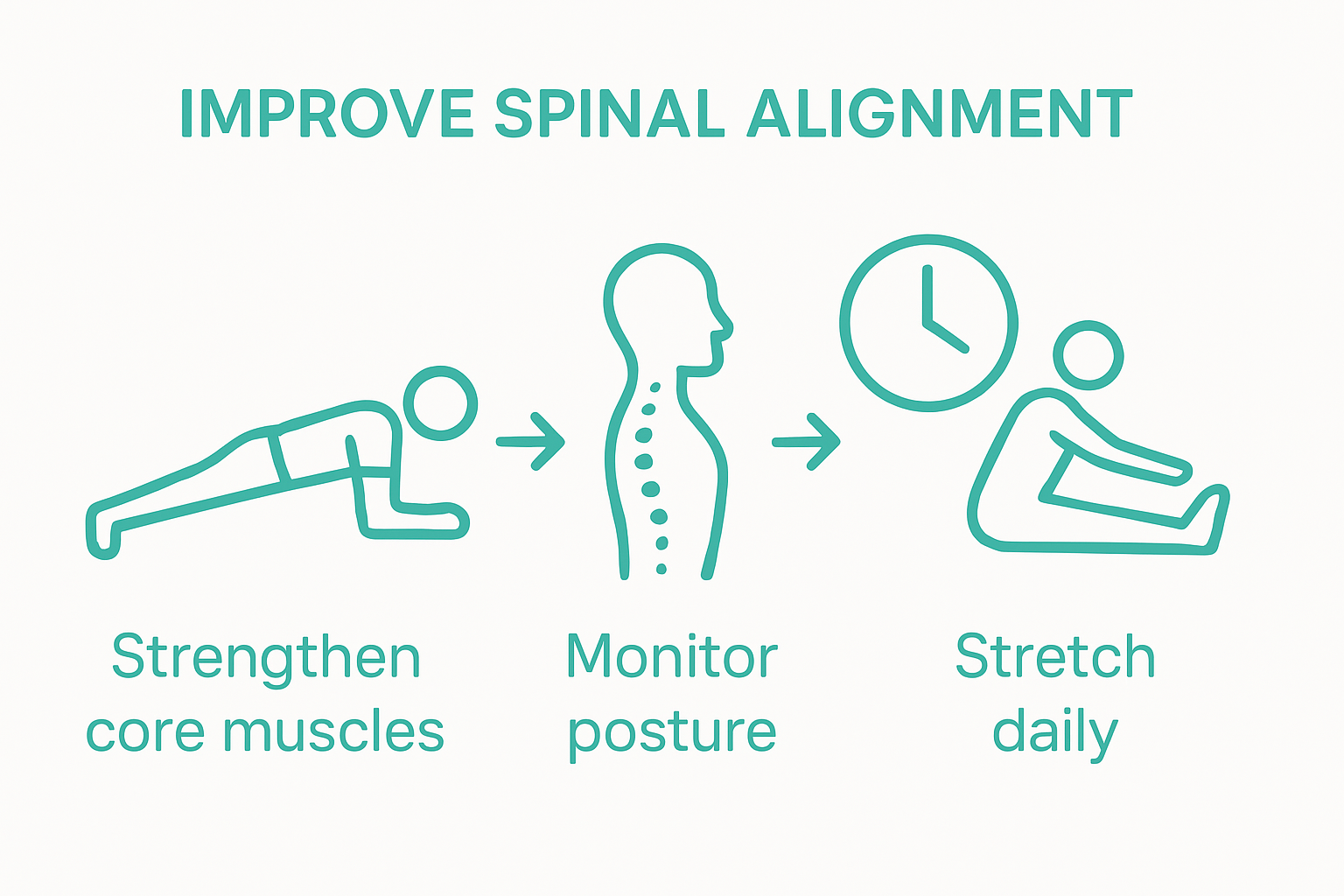
Proper spinal health demands a multifaceted approach. Strategies for preventing rounded shoulder posture highlight the importance of combining targeted exercises, ergonomic awareness, and regular movement assessments. Active individuals must focus on developing muscular balance, improving postural habits, and maintaining consistent mobility practices.
Key practical strategies for improving spinal health include:
Develop a consistent core and back strengthening routine
Practice regular stretching and mobility exercises
Implement ergonomic adjustments in work and training environments
Use dynamic movement screenings to identify potential imbalances
Maintain proper hydration and nutrition to support muscle and joint health
Engage in regular chiropractic assessments
Chiropractic self-care techniques for active lifestyles provide additional tools for maintaining optimal spinal alignment. By integrating professional guidance with personal commitment, active Aussies can develop a proactive approach to spinal health that supports long-term performance and prevents potential movement restrictions.
Unlock Your Body’s True Potential with Expert Spinal Alignment Care
If poor spinal alignment is holding you back from your best performance, it is time to take control before compensatory patterns lead to chronic pain or injury. Active Aussies juggling training and daily life deserve targeted support that addresses key challenges like pelvic tilt, rounded shoulder posture, and muscular imbalance.
At North Fremantle Chiropractic, we specialise in hands-on, movement-based care designed to restore your biomechanical balance and keep you moving freely. Combining elite chiropractic techniques with real-world strength and conditioning principles, we build resilience that goes beyond fixing backs — we help legends of all ages perform at their peak. Discover how tailored chiropractic assessments and recovery strategies can enhance your movement quality and prevent long-term issues by visiting our website. Take the first step towards better spinal health with chiropractic care for active lifestyles and learn how chiropractic recovery techniques can speed up your comeback. Don’t wait until discomfort slows you down — start building strength, mobility, and confidence today.
Frequently Asked Questions
What is spinal alignment and why is it important for active individuals?
Spinal alignment refers to the proper positioning of your head, shoulders, spine, hips, knees, and ankles in relation to each other. It’s crucial for active individuals as it affects movement efficiency, reduces strain, and minimizes injury risk during physical activities.
What are common signs that my spinal alignment may be poor?
Signs of poor spinal alignment include persistent neck and shoulder stiffness, uneven shoulder height, lower back pain, reduced mobility, noticeable forward head posture, and recurring muscle fatigue.
How can I improve my spinal alignment?
You can improve spinal alignment by developing a consistent core and back strengthening routine, practicing regular stretching and mobility exercises, making ergonomic adjustments in your workspace, and engaging in regular chiropractic assessments to monitor your spinal health.
What risks do athletes face if they ignore spinal alignment issues?
Athletes who ignore spinal alignment issues risk increased likelihood of injuries, reduced muscular power and efficiency, compromised range of motion, higher energy expenditure during activities, and diminished overall athletic performance.
Recommended
Comments