
7 Expert Shoulder Mobility Exercises for Active Aussies
- Dr Nathan Bridger

- Dec 1, 2025
- 9 min read
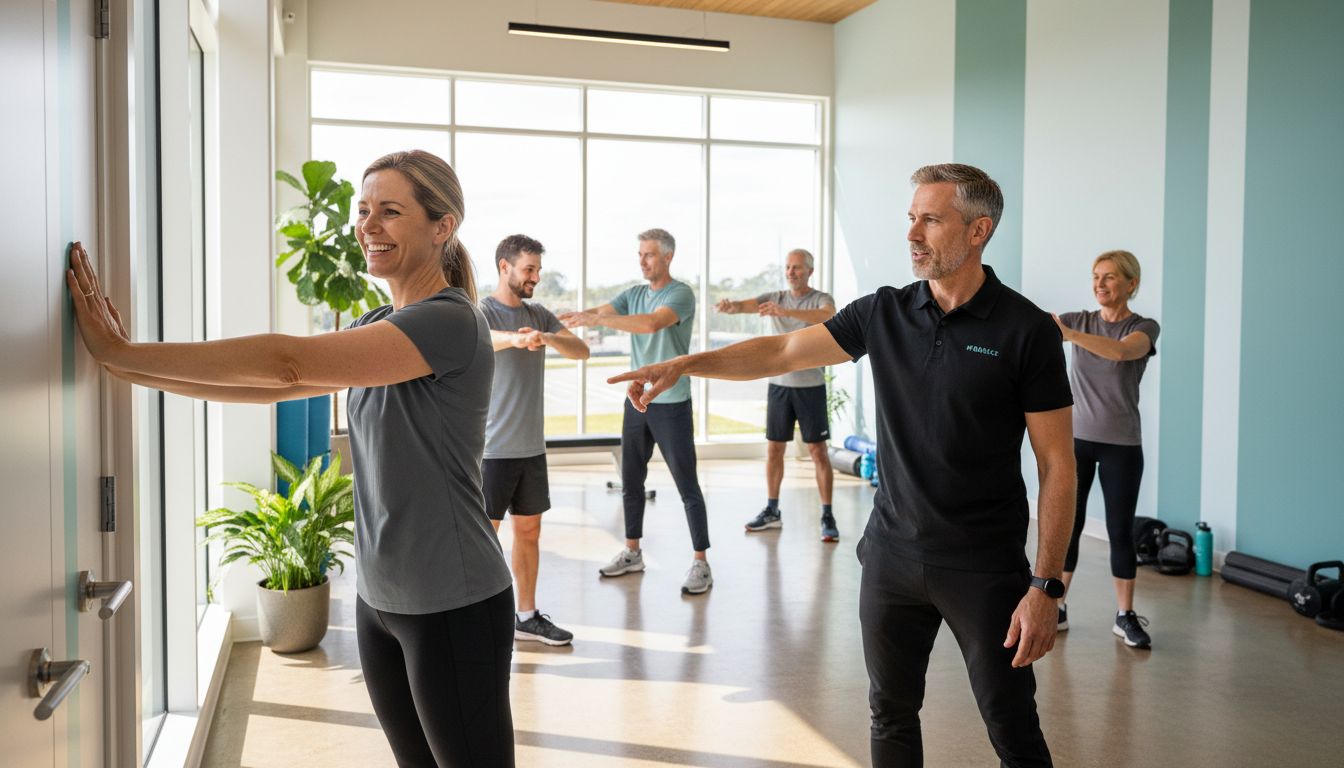
Over 60 percent of australian adults experience shoulder pain or stiffness at some point in their lives. Whether you are an athlete, tradie, or someone glued to a desk all day, these issues can hold you back from daily activities and long term health. Using evidence based techniques to improve shoulder mobility is the smart way to stay active and pain free. Discover practical movements that make a real difference for anyone looking to loosen up and move with confidence.
Table of Contents
Quick Overview
Key Message | Explanation |
1. Perform Shoulder Circles Daily | These prepare your shoulders for movement, increasing mobility and reducing injury risks. Just 30 seconds can make a significant difference. |
2. Use Doorway Pec Stretch | This stretch counteracts tightness from prolonged sitting, improving flexibility and posture. Hold for 20-30 seconds for best results. |
3. Incorporate Wall Slides | Aiming to improve range of motion, this exercise engages stabilising muscles. Spend a few minutes daily to restore movement patterns. |
4. Strengthen Rotator Cuff with Band Pull-Aparts | This targeted exercise enhances shoulder stability, reducing risks of injuries. Aim for 12-15 repetitions for effective strength building. |
5. Practice Thread the Needle Stretch | A yoga-inspired move that unlocks mobility in shoulders and upper back; perform 2-3 repetitions on each side for optimal results. |
1. Warm Up With Controlled Shoulder Circles
Shoulder circles are your secret weapon for preparing your upper body for action and preventing potential movement restrictions. By incorporating this simple yet powerful warm up technique, you can significantly improve your shoulder mobility and reduce injury risk.
According to Very Well Fit, shoulder circles are an effective exercise for loosening the shoulder area and enhancing range of motion. Think of them like a gentle wake up call for your shoulder joints preparing them for more intense movement.
To perform controlled shoulder circles, stand with your feet shoulder width apart and keep your core engaged. Technique is everything. Move your shoulders in smooth, deliberate circular motions:
Start with small circles rotating forwards
Gradually increase circle diameter
Repeat 10 circles in each direction
Switch between clockwise and anticlockwise rotations
Pro tip for active Aussies: perform these circles before any workout, whether you’re hitting the gym, preparing for a run, or getting ready for weekend sports. Just 30 seconds of shoulder circles can make a substantial difference in your overall mobility and injury prevention strategy.
2. Improve Flexibility With Doorway Pec Stretch
If you spend hours hunched over a computer or working at a desk, your chest muscles can become tight and restricted. The doorway pec stretch is a simple yet powerful technique to counteract poor posture and restore shoulder flexibility.
Muscle Memory Matters. Our chest muscles (pectoralis major and minor) tend to shorten with prolonged sitting, creating tension that can limit shoulder movement and contribute to poor posture. By regularly performing this stretch, you can help reset your muscle tension and improve overall upper body mobility.
To perform the doorway pec stretch:
Stand inside a doorway with feet shoulder width apart
Place your forearms on each side of the doorframe at shoulder height
Lean forward gently until you feel a stretch across your chest
Hold the position for 20 to 30 seconds
Repeat 2 to 3 times per session
This stretch is particularly beneficial for tradies, office workers, and anyone who maintains static positions for extended periods. By integrating this simple movement into your daily routine, you can help prevent shoulder stiffness and maintain better overall upper body mobility. Remember to breathe deeply and move slowly to maximise the stretch effectiveness.
3. Boost Range With Wall Slides Technique
Wall slides are a game changing exercise for anyone struggling with shoulder mobility and looking to improve their range of motion. This deceptively simple movement can help reset postural imbalances and unlock smoother upper body movement.
Shoulder Mechanics Matter. Our shoulders are complex joints designed for incredible movement potential, but sedentary lifestyles and repetitive activities can dramatically reduce their natural range. Wall slides work like a reset button for your shoulder mechanics by engaging stabilising muscles and promoting proper movement patterns.
To perform wall slides effectively:
Stand with your back against a flat wall
Place your arms against the wall in a goal post position
Slowly slide your arms upward while keeping contact with the wall
Maintain contact between your lower back, head, and wall throughout
Move only as far as you can without losing wall contact
Repeat 8 to 10 times per set
This technique is particularly powerful for desk workers, athletes, and anyone experiencing shoulder stiffness. By spending just a few minutes daily performing wall slides, you can gradually improve shoulder flexibility, reduce injury risk, and restore more natural movement patterns. Focus on smooth controlled motions and listen to your body’s signals during the exercise.
4. Strengthen Rotator Cuff With Band Pull-Aparts
The rotator cuff is a group of small but crucial muscles that stabilise your shoulder joint during movement. Band pull-aparts are a targeted exercise designed to build strength and resilience in these often overlooked muscle groups.
Shoulder Stability Matters. Most active Aussies underestimate the importance of rotator cuff strength. These small muscles play a massive role in preventing injuries during sports, weightlifting, and everyday activities. Weak rotator cuffs can lead to shoulder impingement, reduced range of motion, and potential long term damage.
To perform band pull-aparts effectively:
Grab a resistance band with both hands shoulder width apart
Keep arms straight in front of you at chest height
Slowly pull the band apart until your arms are extended to the sides
Squeeze your shoulder blades together during the movement
Return to starting position with controlled tension
Aim for 12 to 15 repetitions per set
This exercise is particularly beneficial for gym goers, athletes, tradies, and anyone who performs repetitive overhead movements. By dedicating just a few minutes to band pull-aparts, you can significantly improve shoulder joint stability, reduce injury risk, and enhance overall upper body performance. Remember to start with lighter resistance and progressively challenge yourself as your strength improves.
5. Increase Mobility With Thread the Needle Stretch
If you are battling shoulder and upper back stiffness, the thread the needle stretch is your secret weapon for unlocking mobility and releasing built up tension. This yoga inspired movement targets multiple muscle groups simultaneously, offering a comprehensive approach to upper body flexibility.
Mobility Is Movement. Our shoulders carry significant tension from everyday activities like desk work, driving, and repetitive manual labour. The thread the needle stretch helps unwind deep muscle knots, improve thoracic spine rotation, and provide much needed relief for overworked shoulder and back muscles.
To perform the thread the needle stretch:
Start in a tabletop position with hands under shoulders
Lift your right arm towards the ceiling, opening your chest
Slowly thread your right arm underneath your left arm
Rest your right shoulder and head on the ground
Hold the stretch for 20 to 30 seconds
Repeat on the opposite side
Aim for 2 to 3 repetitions per side
This stretch is particularly beneficial for tradies, office workers, athletes, and anyone experiencing upper body stiffness. By dedicating just a few minutes daily to this movement, you can dramatically improve shoulder mobility, reduce muscle tension, and prevent potential long term postural issues. Remember to breathe deeply and move gently into the stretch.
6. Enhance Stability With Scapular Push-Ups
Scapular push-ups are a game changing exercise that targets the often neglected muscles surrounding your shoulder blades. This precise movement helps reset shoulder mechanics and build critical stabilisation strength that many active Aussies overlook.
Shoulder Blade Control Matters. Most people think of push-ups as a chest and arm exercise, but scapular push-ups focus entirely on improving shoulder blade movement and control. By learning to move your shoulder blades independently, you reduce injury risk and improve overall upper body function.
To perform scapular push-ups effectively:
Start in a standard push-up plank position
Keep arms straight and core engaged
Maintain a neutral spine position
Squeeze your shoulder blades together without bending your elbows
Then spread your shoulder blades apart
Perform 10 to 15 controlled repetitions
Focus on smooth, deliberate movements
This exercise is particularly powerful for athletes, gym enthusiasts, tradies, and anyone wanting to improve shoulder joint stability. By dedicating just a few minutes to scapular push-ups, you can dramatically enhance your upper body strength, reduce potential shoulder injuries, and improve overall movement quality. Remember to move slowly and maintain perfect form throughout the exercise.
7. Progress Safely With Resistance Band Dislocations
Resistance band dislocations are a powerful mobility exercise designed to improve shoulder range of motion and build functional strength across your upper body. This deceptively simple movement can help break through mobility restrictions and restore natural shoulder mechanics.
Range Of Motion Matters. Most active Aussies experience shoulder tightness from repetitive movements or prolonged static positions. Resistance band dislocations offer a gentle yet effective way to create space in your shoulder joint, reducing stiffness and enhancing overall movement quality.
To perform resistance band dislocations safely:
Select a light to medium resistance band
Grip the band wider than shoulder width
Start with arms in front of your body at waist height
Slowly rotate the band overhead in a complete circular motion
Keep arms straight throughout the entire movement
Maintain tension in the band
Perform 10 to 12 controlled repetitions
Gradually narrow your grip as mobility improves
This exercise is particularly beneficial for gym enthusiasts, athletes, tradies, and anyone experiencing shoulder tension. By dedicating just a few minutes daily to band dislocations, you can dramatically improve shoulder mobility, reduce injury risk, and restore more fluid upper body movement. Remember to progress slowly and listen to your body throughout the exercise.
Below is a comprehensive table summarising the main upper body exercises and techniques discussed throughout the article.
Exercise | Steps | Benefits |
Shoulder Circles | Stand feet shoulder-width apart; move shoulders in smooth circles. Start with small, grow larger, switch directions. | Improves shoulder mobility and reduces injury risk. |
Doorway Pec Stretch | Stand in doorway, arms on doorframe; lean forward until chest stretches, hold 20-30 seconds. | Counters poor posture, restores shoulder flexibility. |
Wall Slides | Stand back to wall, arms in goal post position, slide up while maintaining contact with wall. | Enhances shoulder range of motion and corrects posture. |
Band Pull-Aparts | Hold resistance band shoulder-width, pull apart to sides, squeeze shoulder blades. | Strengthens rotator cuff, stabilises shoulder joint. |
Thread the Needle Stretch | Tabletop position, right arm up then under left, rest shoulder/head on ground, hold 20-30 seconds. | Releases shoulder tension, improves upper back stiffness. |
Scapular Push-Ups | Standard plank, arms straight, squeeze and spread shoulder blades. | Develops stabilisation strength, improves shoulder blade control. |
Band Dislocations | Grip band wide, rotate overhead in circle, keep tension. Narrow grip as mobility improves. | Increases shoulder mobility, reduces stiffness. |
Unlock Your Shoulder Potential with Expert Support
Struggling with shoulder stiffness and limited mobility can stop you from doing what you love. This article highlights key challenges like tight pecs, weak rotator cuffs, and poor shoulder blade control that many active Aussies face every day. If you recognise the need for improved shoulder stability, enhanced mobility, or just want to move without pain, North Fremantle Chiropractic offers a hands-on, results-driven approach designed to get you back in action.
Take control of your shoulder health today with targeted care that combines elite chiropractic techniques and practical strength conditioning. Visit North Fremantle Chiropractic to experience professional support personalised for your lifestyle. Your journey to better movement and resilience starts now. Book your session and feel the difference.
Explore more about our approach at North Fremantle Chiropractic and begin your path to pain-free, powerful shoulders.
Frequently Asked Questions
What are shoulder mobility exercises and why are they important?
Shoulder mobility exercises are movements designed to enhance the flexibility and range of motion of the shoulder joints. Incorporating these exercises into your routine can help prevent injuries and improve overall performance in physical activities.
How often should I perform shoulder mobility exercises?
Aim to include shoulder mobility exercises in your routine at least 3 to 5 times a week. Consistent practice will lead to noticeable improvements in your shoulder flexibility within a few weeks.
Can I do these exercises if I have existing shoulder pain?
Yes, but it’s important to consult a healthcare professional before starting any new exercise programme, especially if you have ongoing shoulder pain. Start gradually and listen to your body, adjusting the intensity as needed.
How long will it take to see results from these shoulder mobility exercises?
You may start noticing improvements in your shoulder mobility within 2 to 4 weeks of consistent practice. Dedicate just a few minutes each day to these exercises for optimal results.
What should I feel while performing these shoulder mobility exercises?
You should feel a gentle stretch and slight tension in the shoulder area without any pain. Focus on smooth, controlled movements and avoid pushing yourself past your comfort level.
Are these exercises suitable for all fitness levels?
Yes, these shoulder mobility exercises are designed to be accessible for all fitness levels. Modify the movements as needed to suit your individual capabilities and gradually progress as your strength and flexibility improve.
Recommended
Comments