
Pain Science – Why It Matters For Active Aussies
- Dr Nathan Bridger

- Dec 12, 2025
- 8 min read

Over three million Australians live with chronic pain every day, a number that highlights how deeply this issue affects daily life and movement. Whether you are active or simply striving to stay healthy, pain can interrupt routines, limit activities, and create ongoing frustration. By exploring what modern pain science reveals, you will unravel myths and gain practical knowledge to understand and better manage discomfort in the Australian context.
Table of Contents
Key Takeaways
Point | Details |
Pain is a complex experience | Pain involves intricate interactions between physical, psychological, and social factors, serving as a protective alert system rather than a mere response to tissue damage. |
Types of pain require tailored approaches | Understanding the difference between acute and chronic pain is crucial for effective management and recovery strategies. |
Pain perception is subjective | Each individual may experience pain differently based on their unique neurological, emotional, and contextual factors, highlighting the need for personalised pain management. |
Holistic recovery strategies are key | Effective recovery involves integrating physical, psychological, and social elements to foster overall wellbeing and resilience instead of merely focusing on pain elimination. |
Pain Science Defined For Modern Health
Pain isn’t just a simple physical sensation - it’s a complex neurological experience that goes far beyond basic nerve signals. Understanding how pain works reveals an intricate interaction between our body’s physical systems and our brain’s interpretative mechanisms.
At its core, pain functions as a sophisticated protective alarm system within our nervous system. According to research from Pain Australia, pain represents an “unpleasant sensory and emotional experience” that serves critical biological purposes. This means pain isn’t just about physical damage, but also involves psychological and social dimensions that influence how we perceive and respond to discomfort.
The Queensland government’s health resources explain that pain operates like an integrated warning network, processing information from multiple bodily sources and environmental contexts. Our nervous system continuously evaluates potential threats, generating pain responses that motivate protective behaviours. This means what we feel isn’t always a direct representation of tissue damage, but a complex neurological interpretation designed to keep us safe.
For active individuals, understanding pain science becomes crucial. It helps transform our relationship with discomfort from something fearful into a valuable communication system. By recognising pain as an intelligent, adaptive response rather than a purely negative experience, we can approach recovery and performance with greater insight and resilience.
Types Of Pain: Acute, Chronic, And Beyond
Understanding pain isn’t a one-size-fits-all experience. Different pain types require unique approaches to management and treatment, each presenting distinct characteristics and challenges for active individuals seeking optimal health.
According to the Australian and New Zealand College of Anaesthetists, pain can be categorised into several critical classifications. Acute pain represents a short-term response typically triggered by specific injuries or surgical procedures. It serves as an immediate protective mechanism, signalling potential tissue damage and prompting rapid protective responses. This pain type usually resolves as healing progresses, acting like a temporary warning system for the body.
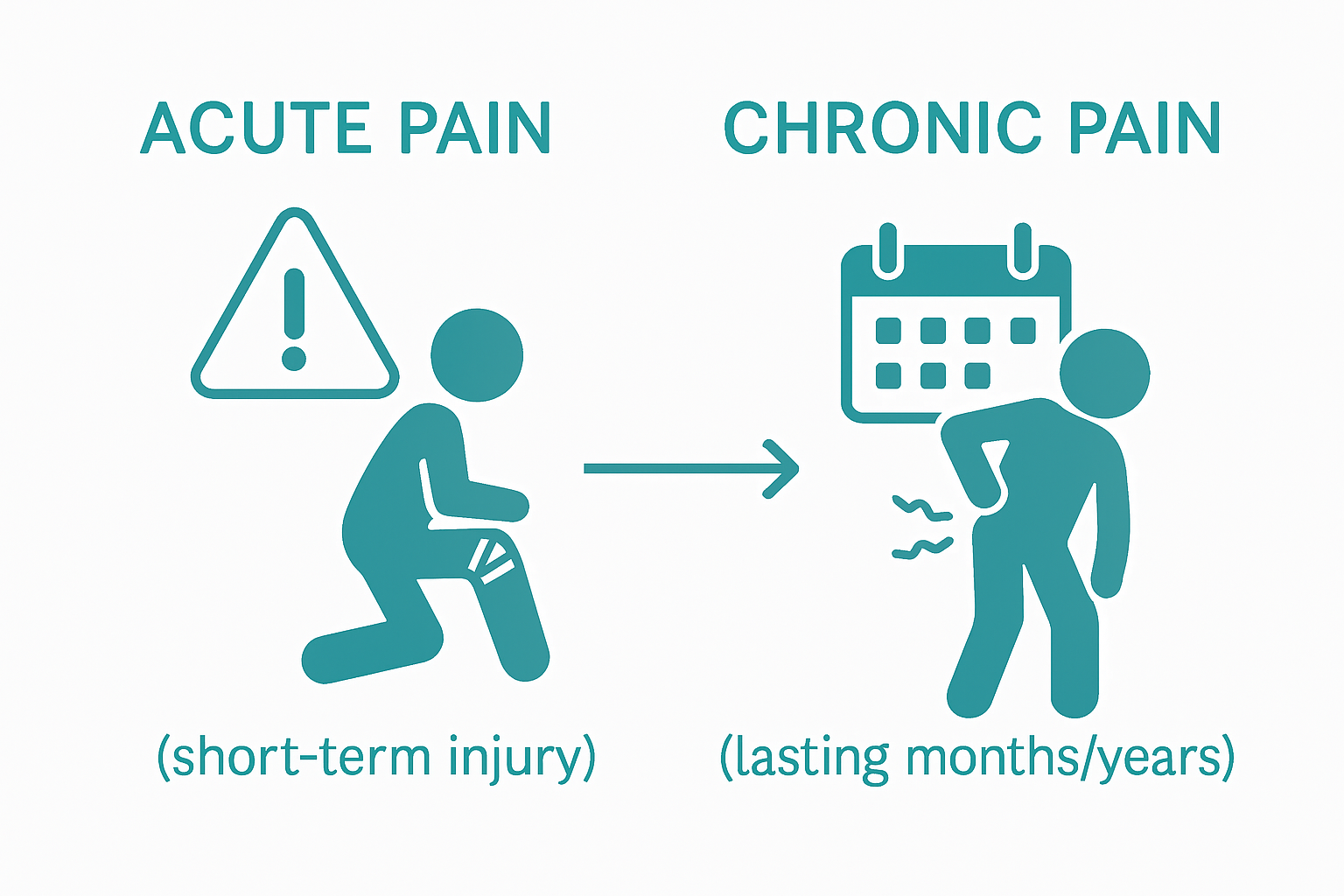
Chronic pain, by contrast, persists well beyond normal healing timeframes. This complex condition extends beyond physical sensations, involving intricate interactions between nervous system, psychological state, and environmental factors. The persistent nature of chronic pain can significantly impact an individual’s quality of life, affecting movement patterns, emotional wellbeing, and overall functional capacity.
Beyond these primary categories, pain experiences can include specialised types like cancer-related pain, neuropathic pain, and inflammatory pain. Each variation demands a nuanced understanding and targeted treatment approach. For active Australians managing pain, recognising these distinctions becomes crucial in developing effective, personalised strategies for recovery and performance maintenance.
How Pain Works In The Brain And Body
Our pain experience is far more complex than a simple cause-and-effect response. Understanding neural pain mechanisms reveals an intricate communication system between our body and brain that goes beyond basic sensory signals.

Research from Neuroscience Research Australia highlights that pain perception is a sophisticated process where the brain actively evaluates potential threats. This evaluation combines multiple inputs - current body signals, previous experiences, emotional states, and stored memories. The brain doesn’t just passively receive pain signals; it actively interprets and constructs the pain experience, determining whether a particular sensation represents genuine danger or can be modulated.
The nervous system operates like an advanced warning network, continuously processing environmental and physiological information. According to Southern Valleys Health Services, pain arises from the brain’s complex interpretation of signals from both the body and surrounding environment. This means what we experience as pain isn’t a direct, linear transmission of damage, but a nuanced neurological response shaped by numerous contextual factors.
For active individuals, understanding this intricate pain mechanism becomes crucial. Recognising that pain is a dynamic, adaptive response rather than a fixed signal allows for more sophisticated approaches to management. By appreciating the brain’s role in pain perception, we can develop more effective strategies for recovery, performance, and overall physical resilience.
Common Pain Myths And Misconceptions
Pain science is riddled with misconceptions that can significantly impact how active individuals approach their health and recovery. Debunking these myths becomes crucial for developing more effective pain management strategies.
One persistent myth suggests that pain is always directly proportional to physical tissue damage. However, research from Pain Australia reveals that pain experiences are highly individualised and influenced by a complex interplay of psychological, social, and physiological factors. This means two people with seemingly identical injuries might experience dramatically different pain levels, challenging the simplistic notion that more damage automatically equals more pain.
The Queensland government’s health resources highlight another critical misconception: that persistent pain is purely a physical phenomenon. In reality, pain perception involves intricate neurological processing that extends far beyond tissue condition. Psychological states, past experiences, emotional context, and environmental factors all contribute to how we interpret and experience pain. This multidimensional understanding suggests that effective pain management requires a holistic approach that addresses mental, social, and physical dimensions.
For active Australians, recognising these nuanced pain mechanisms can be transformative. Instead of viewing pain as a straightforward warning signal, we can understand it as a sophisticated protective response that reflects our entire bodily ecosystem. This perspective empowers individuals to approach pain with curiosity, strategic thinking, and a more comprehensive understanding of their body’s complex communication systems.
Applying Pain Science To Injury Recovery
Recovery isn’t just about treating physical symptoms - it’s about understanding the complex interactions between body, mind, and movement. Comprehensive recovery strategies require a holistic approach that goes beyond traditional rehabilitation methods.
Pain Australia emphasises a whole-person approach to pain management, recognising that effective recovery involves integrating physical, psychological, and social factors. This means addressing not just the immediate injury, but understanding how emotional states, past experiences, and environmental contexts influence healing. Active individuals can benefit from this approach by developing more nuanced strategies that consider the entire spectrum of their health and wellbeing.
The Australian and New Zealand College of Anaesthetists highlights the importance of understanding pain mechanisms in persistent pain management. Successful recovery isn’t about eliminating pain entirely, but about developing adaptive strategies that restore function and improve quality of life. This might involve targeted movement therapies, psychological support, progressive loading techniques, and a deep understanding of how the nervous system processes and responds to injury signals.
For athletes and active Australians, applying pain science means transforming recovery from a passive process into an active, informed journey. It’s about listening to your body, understanding its complex communication systems, and developing resilience through knowledge and strategic intervention. By embracing a comprehensive approach, individuals can turn potential setbacks into opportunities for growth, learning, and improved physical performance.
Mistakes To Avoid In Managing Pain
Pain management is far more nuanced than most people realise. Understanding common pitfalls can dramatically improve recovery and long-term health strategies for active individuals.
Pain Australia warns against a critical mistake: over-relying on medication as the primary pain management strategy. Effective care requires a comprehensive approach that goes beyond simply masking symptoms. This means developing a holistic management plan with your healthcare provider that addresses the root causes of pain, integrates psychological support, and focuses on restoring functional movement.
The Queensland Spinal and Chronic Injury Services highlight another significant error: treating pain as a purely physical phenomenon. A multidisciplinary approach is essential, recognising that pain involves complex interactions between physiological, psychological, and social factors. This means avoiding simplistic, one-dimensional treatment strategies that fail to consider the broader context of an individual’s health and experiences.
For active Australians, the most profound mistake is viewing pain as an enemy to be conquered, rather than a communication system to be understood. Successful pain management requires curiosity, patience, and a willingness to explore comprehensive rehabilitation strategies that restore not just physical function, but overall quality of life. By approaching pain with a holistic, informed perspective, individuals can transform their recovery journey from a battle against symptoms to a strategic path of healing and personal growth.
Unlock Better Movement and Pain Relief With Science-Backed Care
If you have been wrestling with pain that feels more complex than just physical discomfort understanding pain science is the first step to reclaiming your active lifestyle. This article highlights how pain involves your brain, emotional state, and environment working together to protect you. At North Fremantle Chiropractic we apply these concepts to provide more than quick fixes. We focus on building resilience through hands-on chiropractic care and targeted strength and conditioning so you can move, feel, and perform better whether you are a weekend warrior or training for your next big event.

Ready to move beyond pain and back into doing what you love Discover how our elite sports-focused methods integrate with proven pain science principles to create personalised recovery plans that empower you now. Take the next step for your health and visit North Fremantle Chiropractic. Learn more about how we help you build resilience while addressing pain from multiple angles. Your journey to improved performance and lasting wellbeing starts with informed care designed for active Aussies like you.
Frequently Asked Questions
What is pain science and why is it important for active individuals?
Pain science explains the complex neurological mechanisms behind how we experience pain. Understanding these mechanisms helps active individuals to view pain as a protective response, rather than just a negative sensation. This awareness can lead to improved recovery and overall performance.
What are the different types of pain, and how do they affect recovery?
Pain can be classified into acute and chronic types, among others. Acute pain is a short-term response to injury, while chronic pain persists beyond normal healing timeframes. Each type requires specific management strategies for effective recovery and maintaining optimal health.
How does pain work in the brain, and what factors influence our perception of pain?
Pain perception involves the brain actively interpreting signals from the body and the environment. Factors such as previous experiences, emotional states, and environmental contexts all contribute to how we perceive pain, making it crucial to understand these dynamics for effective pain management.
What are common misconceptions about pain and its management?
One common misconception is that pain is directly proportional to physical damage; however, pain experiences are highly individual and influenced by psychological and social factors. Effective pain management requires a holistic approach that considers all dimensions of health, not just the physical aspect.
Recommended
Comments