
How to Manage Tech Neck Naturally for Active Aussies
- Dr Nathan Bridger

- Dec 1, 2025
- 7 min read
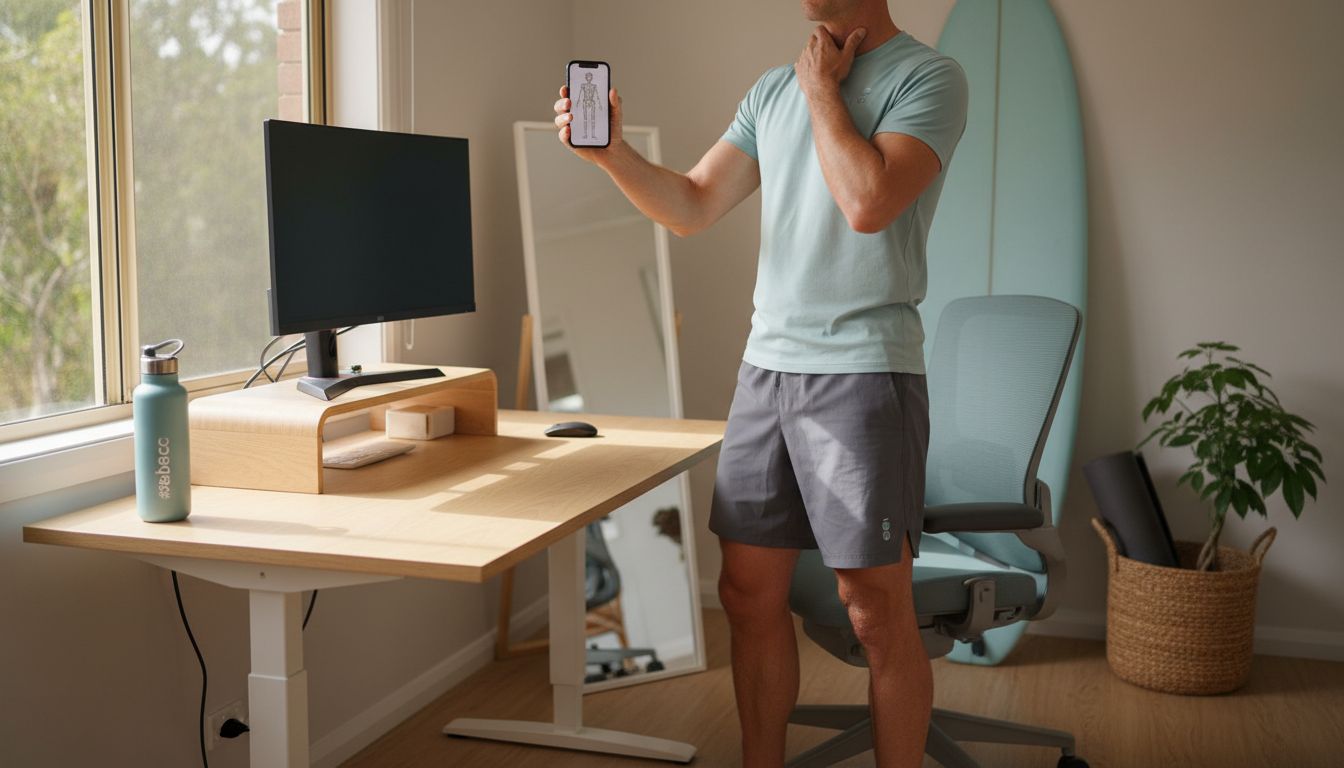
More than 80 percent of australian adults experience neck or shoulder pain linked to their digital habits. Today, smartphones and laptops have become part of every routine, and for many, that means hours in postures our bodies were never designed for. If stiff shoulders or tech neck are slowing you down, learning how to assess and adjust your habits can help you stay comfortable and pain free at work or home.
Table of Contents
Quick Summary
Key Point | Explanation |
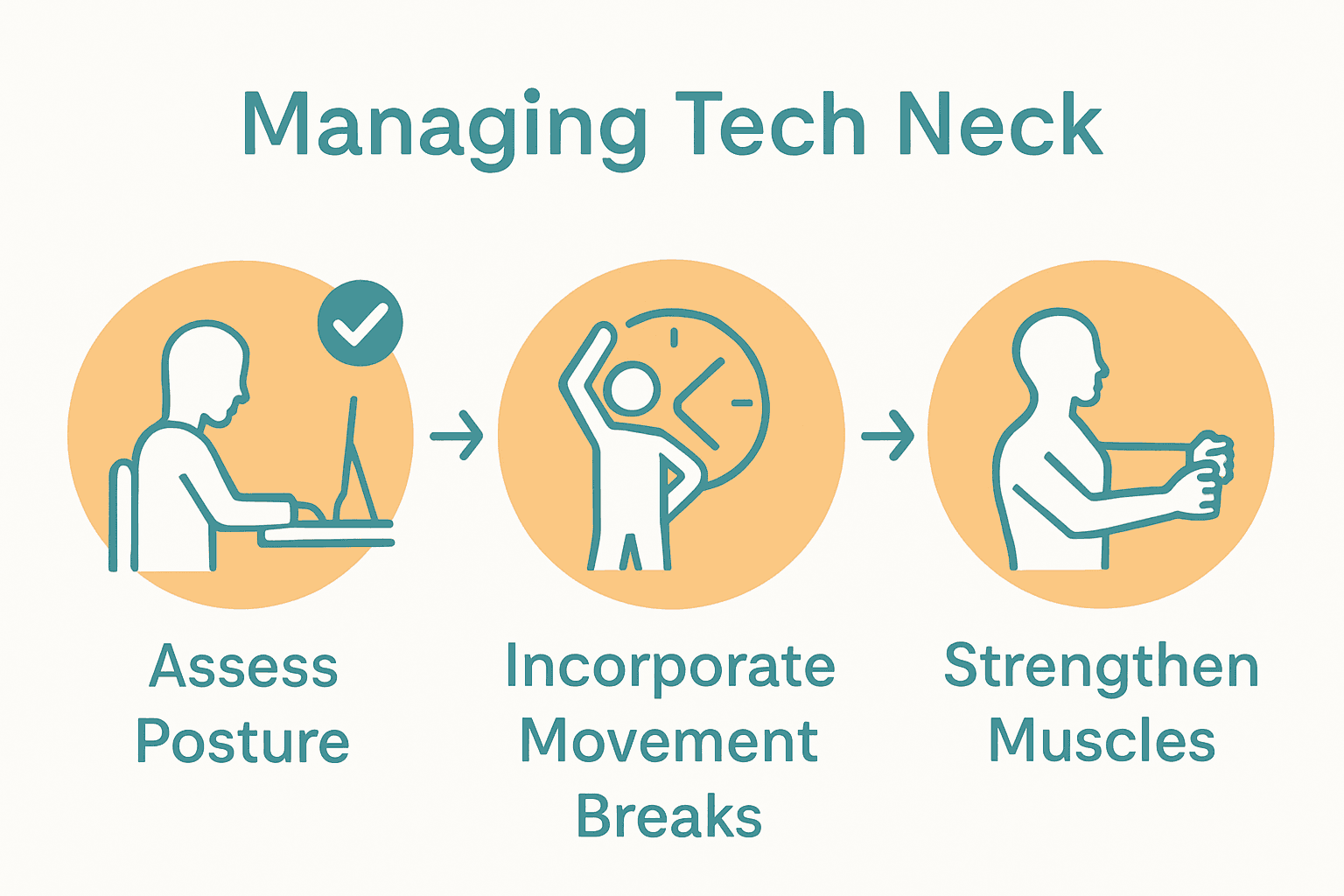
1. Assess your tech posture regularly | Check your sitting position every 30 minutes to avoid chronic strain and maintain a neutral spine alignment. |
2. Create an ergonomic workspace | Adjust your chair and monitor to support proper posture, ensuring feet are flat and the top of the screen is at eye level. |
3. Incorporate regular movement breaks | Take brief breaks every 30 to 45 minutes for neck mobility exercises to prevent stiffness and promote circulation. |
4. Strengthen neck and upper back muscles | Perform simple exercises daily, such as chin tucks and shoulder blade squeezes, to improve postural strength. |
5. Monitor progress over time | Keep a movement and pain journal to track discomfort and evaluate the effectiveness of your ergonomic adjustments and exercises. |
Stage 1: Assess your tech habits and posture
Let’s get real about how your digital lifestyle might be contributing to tech neck. According to the University of Adelaide, understanding your current tech habits is the first critical step in preventing long term neck and shoulder strain.
Start by doing a full body scan right now. How are you sitting? Are your shoulders hunched forward? Is your neck craned down towards your smartphone or laptop? Most people don’t realise they’re creating significant postural stress. The ergonomics guidelines from Monash University recommend checking your alignment every 30 minutes to interrupt poor positioning patterns.
Quick diagnostic test: Hold your phone or device at eye level instead of dropping your head down. If this feels uncomfortable or challenging, it means your neck muscles have already adapted to a compromised position. Your goal is to retrain your body to maintain a neutral spine alignment where your ears, shoulders, and hips form a straight vertical line when viewed from the side. This simple awareness can dramatically reduce your risk of developing chronic tech neck symptoms.
What comes next is understanding how to modify your workspace and digital habits to support better posture and movement patterns.
Stage 2: Set up an ergonomic workspace
Your workspace is not just a spot to plonk down and work it’s your health headquarters. According to icare NSW, creating an ergonomic environment is crucial for preventing long term musculoskeletal issues.
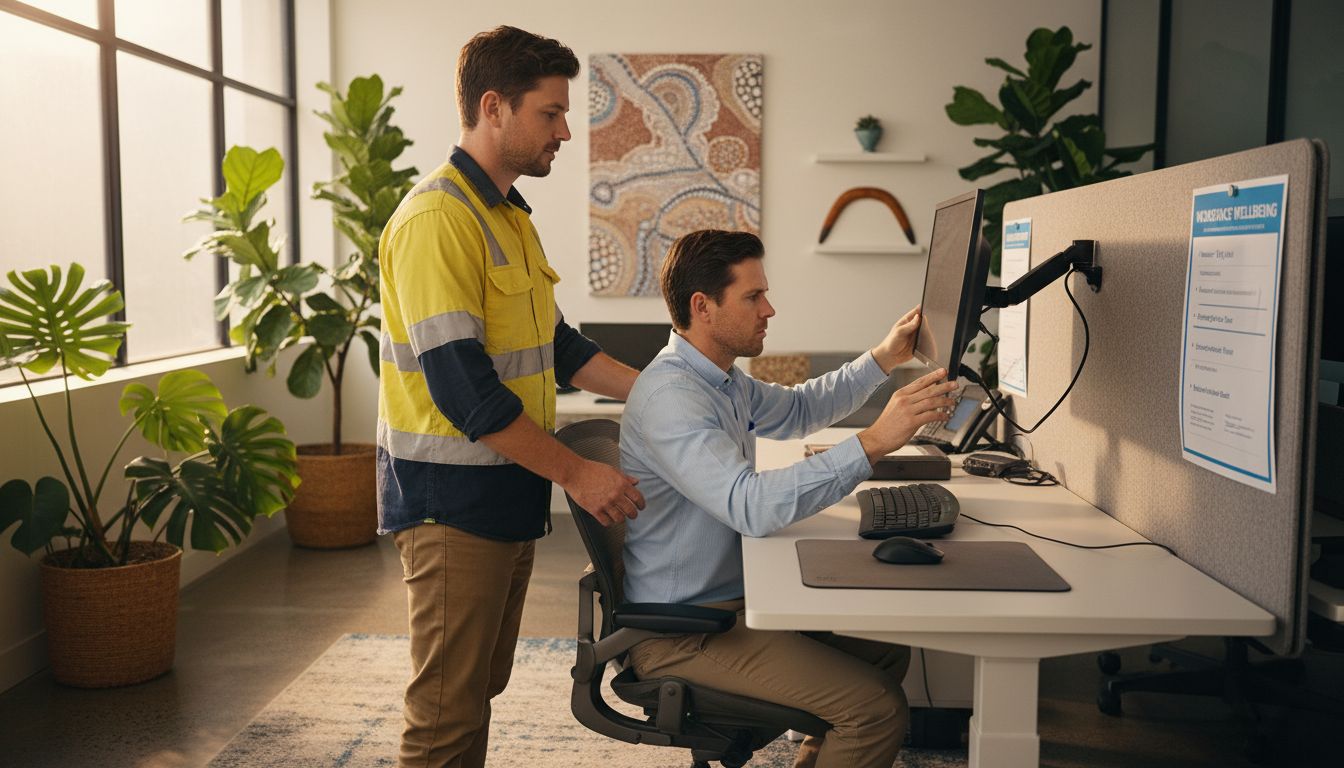
The University of Adelaide recommends starting with your chair. Position it so your feet are flat on the floor with knees at a 90 degree angle. Your lower back should be supported by the chair’s lumbar support. Next, adjust your monitor height so the top of the screen is at or slightly below eye level this prevents your neck from tilting downward and creates a neutral spine position.
Pro tip for tradies and desk workers alike your keyboard and mouse should be close enough that you’re not reaching or stretching. This minimises shoulder and neck strain. If you find yourself constantly adjusting or feeling uncomfortable it’s time to reassess your setup. Remember good ergonomics is about creating a workspace that supports your body’s natural alignment not fighting against it.
With your workspace now optimised you’re ready to explore movement strategies that will keep your body resilient and pain free.
Stage 3: Incorporate neck-friendly movement breaks
Safe Work Australia highlights the critical importance of breaking up prolonged static postures to prevent musculoskeletal disorders. Your neck doesn’t want to be stuck in one position for hours on end it wants regular movement and variation.
Design a simple movement routine that you can integrate seamlessly into your workday. Every 30 to 45 minutes set a timer and perform a quick neck mobility sequence. Start by gently rotating your head in slow circles clockwise and counterclockwise. Then do side to side tilts and forward and backward nods. These micro breaks don’t need to be long just two to three minutes can reset your muscle tension and promote better circulation.
For tradies and desk workers who struggle to remember movement breaks try this hack link your movement break to something you already do consistently. Maybe it’s every time you finish a coffee or complete a work task. Your body will thank you for creating these small windows of reset and relief. By proactively managing your neck’s mobility you’re building resilience against tech neck and reducing long term strain.
Next up we’ll explore specific stretches and exercises that can help strengthen and protect your neck muscles.
Stage 4: Strengthen neck and upper back muscles
The Australian Physiotherapy Association emphasises that targeted muscle strengthening is crucial for combating tech neck. Your neck and upper back muscles are like a support network that needs consistent training to maintain proper posture and reduce strain.
Healthdirect Australia recommends a series of gentle yet effective exercises. Start with chin tucks an exercise that retrains your neck muscles to maintain proper alignment. Sit or stand with your shoulders relaxed and gently draw your chin straight back creating a double chin effect. Hold for five seconds and repeat 10 times. Next incorporate shoulder blade squeezes by pulling your shoulder blades together as if you’re holding a piece of paper between them this helps counteract the rounded shoulder position common with prolonged tech use.
For tradies and desk warriors add resistance band exercises to build strength. Use a light resistance band to perform external shoulder rotations and rows these movements target the muscles that support your neck and upper back. Remember the key is consistency not intensity. Aim to perform these exercises daily even if its just for five to ten minutes. Your body adapts to what you consistently do so make these strength movements a non negotiable part of your routine.
With these muscle strengthening strategies youre now equipped to take proactive steps against tech neck and build a more resilient body.
Stage 5: Monitor progress and tweak your routine
Safe Work Australia emphasises the critical importance of ongoing assessment and adaptation in managing workplace health risks. Your tech neck prevention strategy isn’t a one time fix it’s a dynamic process that requires regular review and adjustment.
Start by keeping a simple movement and pain journal. Track your daily neck mobility, any discomfort levels, and the effectiveness of your exercises. Note how your body feels after implementing your new ergonomic routine. Are you experiencing less tension? Do certain stretches feel easier? Pay attention to subtle changes. Your body communicates valuable information if you’re willing to listen and observe.
Check in with yourself every four to six weeks to evaluate progress. This might mean reassessing your workspace setup adjusting your strengthening exercises or consulting a professional if you’re not seeing improvements. For tradies and desk jockeys remember that your body is constantly adapting your routine should evolve too. Don’t get stuck in a rigid approach flexibility both in movement and mindset is key to long term musculoskeletal health.
Your proactive approach to managing tech neck puts you ahead of the curve in maintaining a strong resilient body.
Take Control of Tech Neck with Professional Support
Managing tech neck naturally means more than just improving your posture or taking movement breaks. If you are struggling with persistent neck tension or those subtle aches that affect your daily performance as an active Aussie, it is time to level up your approach. At North Fremantle Chiropractic, we understand how vital it is to build resilience through targeted care that goes beyond quick fixes. Our hands-on chiropractic treatments combine expert techniques with movement-based strength principles designed to restore your neck and upper back health.

Stop letting tech neck hold you back from doing what you love. Visit North Fremantle Chiropractic today to experience personalised care that helps you break free from discomfort, rebuild muscle strength, and maintain long-term wellbeing. Your body deserves more than pain relief it deserves resilience. Take the first step now and discover how our community-focused approach can get you moving better and feeling stronger.
Frequently Asked Questions
How can I assess my current tech habits to manage tech neck?
Start by doing a full body scan to check your posture while using devices. Pay attention to whether your shoulders are hunched or if your neck is craned down. Aim to evaluate your alignment every 30 minutes to create awareness of your body’s positioning.
What should my ergonomic workspace setup look like to prevent tech neck?
Your chair should support your lower back, with your feet flat on the floor and knees at a 90-degree angle. Position your monitor so the top of the screen is at or just below eye level to avoid straining your neck. Ensure your keyboard and mouse are at a comfortable reach to minimise shoulder tension.
How often should I take movement breaks to avoid tech neck?
Aim to take a movement break every 30 to 45 minutes during your workday. Set a timer and take just two to three minutes to perform quick neck mobility exercises, like gentle head rotations and tilts, to reset muscle tension and improve circulation.
What specific exercises can I do to strengthen my neck and upper back muscles?
Incorporate chin tucks and shoulder blade squeezes into your daily routine to reinforce good posture. Perform each exercise for a few minutes daily, focusing on consistency, and aim for a minimum of five to ten minutes to help combat tech neck.
How can I effectively monitor my progress in managing tech neck?
Keep a simple movement and pain journal to track your neck mobility, discomfort levels, and the effectiveness of your exercises. Review your notes every four to six weeks to assess improvements and adjust your routine as needed to ensure it meets your body’s evolving needs.
Recommended
Comments