
Evidence-Based Chiropractic: Everything You Need to Know
- Dr Nathan Bridger

- Dec 3, 2025
- 8 min read

Nearly 90 percent of australian adults will experience back pain at some stage in their lives, yet confusion still surrounds the safest and most effective care options. With the rise of evidence-based chiropractic care, patients now have access to treatments that rely on scientific research instead of outdated traditions. This approach empowers individuals to make informed health decisions and gain confidence in their care, ensuring improved wellbeing and smarter choices for lasting relief.
Table of Contents
Key Takeaways
Point | Details |
Evidence-Based Chiropractic Care | Integrates scientific research, clinician expertise, and patient needs for personalised treatment strategies. |
Ongoing Professional Development | Chiropractors must continuously update their knowledge and critically evaluate research to provide effective care. |
Clear Patient Communication | A transparent approach involving treatment rationale fosters collaboration and enhances patient trust. |
Safety Protocols | Comprehensive pre-treatment assessments minimise risks and ensure safe, effective chiropractic interventions. |
Defining Evidence-Based Chiropractic Care
Evidence-based chiropractic care represents a sophisticated approach to healthcare that goes far beyond traditional treatment methods. At its core, this approach integrates rigorous scientific research, clinical expertise, and individualised patient needs to deliver targeted, effective care. When chiropractors apply evidence-based practice principles, they transform patient management from a one-size-fits-all model to a personalised, scientifically grounded strategy.
The fundamental pillars of evidence-based chiropractic care include three critical components: the best available research evidence, the clinician’s professional expertise, and the patient’s unique values and preferences. This holistic framework ensures that every treatment decision is carefully considered and tailored. Unlike traditional approaches that might rely solely on practitioner experience, evidence-based practice demands ongoing evaluation of current scientific literature, continuous professional development, and a commitment to understanding each patient’s specific context.
In practical terms, this means chiropractors must constantly update their knowledge, critically analyse research findings, and apply these insights directly to patient care. They must also remain transparent about treatment rationales, potential outcomes, and be willing to adapt their approaches based on emerging scientific understanding. By embracing this dynamic, patient-centred model, chiropractors can provide more precise, effective interventions that address root causes rather than merely managing symptoms.
The ultimate goal of evidence-based chiropractic care is not just treatment, but comprehensive musculoskeletal health and wellness. This approach recognises that each patient’s body responds differently and requires a nuanced, scientifically informed strategy. Whether addressing chronic pain, improving mobility, or supporting athletic performance, evidence-based practice represents the gold standard in modern chiropractic healthcare.
How Evidence Guides Chiropractic Treatments
Evidence-based chiropractic treatments represent a sophisticated, data-driven approach to musculoskeletal health that transforms traditional treatment methodologies. When chiropractors implement evidence-based practice principles, they move beyond intuitive or historical treatment protocols towards scientifically validated interventions that prioritise patient outcomes. This approach ensures that every manipulation, adjustment, and therapeutic recommendation is grounded in rigorous research and clinical understanding.
The guidance of evidence in chiropractic treatments involves multiple sophisticated layers. Sports chiropractic care insights demonstrate how scientific research helps practitioners design targeted interventions. Clinicians systematically evaluate research literature, critically analyse clinical trial results, and integrate these findings with their professional expertise and patient-specific contextual factors. This means that treatment strategies are continuously refined, reflecting the most current understanding of musculoskeletal biomechanics, neurological responses, and rehabilitation techniques.
Practical implementation of evidence-based guidance requires chiropractors to engage in ongoing professional development and maintain a commitment to scientific literacy. They must critically assess research methodologies, understand statistical significance, and distinguish between high-quality, peer-reviewed studies and less rigorous investigations. By maintaining this scholarly approach, chiropractors ensure that their treatment protocols are not static but dynamically responsive to emerging scientific knowledge.
Ultimately, evidence-based guidance transforms chiropractic care from a potentially subjective practice into a precise, patient-centred healthcare discipline. It shifts the focus from treating symptoms to understanding root biomechanical causes, enabling more effective, personalised interventions. This approach empowers patients by providing transparent, scientifically substantiated treatment rationales and measurable outcomes, fostering a collaborative relationship between practitioner and patient in achieving optimal musculoskeletal health.
Who Benefits From Evidence-Based Practice
Evidence-based chiropractic practice extends its benefits across a diverse range of individuals, transforming musculoskeletal healthcare for patients with varying needs and conditions. Sports chiropractic care insights reveal that athletes, from weekend warriors to professional competitors, particularly gain from this precision-driven approach. By utilising scientifically validated treatment protocols, chiropractors can offer targeted interventions that address specific biomechanical challenges, reduce injury risks, and optimise physical performance.
Different population segments experience unique advantages through evidence-based practice. Young athletes benefit from tailored rehabilitation strategies, professionals managing desk-related postural issues receive precise interventions, and older adults experiencing chronic musculoskeletal conditions gain access to nuanced, research-supported treatment plans. Critically, this approach democratises healthcare by ensuring that treatment recommendations are transparent, measurable, and grounded in rigorous scientific understanding rather than subjective practitioner experiences.

Patients with complex or chronic conditions stand to gain significantly from evidence-based chiropractic care. Individuals managing persistent back pain, recurring sports injuries, workplace-related musculoskeletal disorders, or neurological complications can access more sophisticated, comprehensive treatment strategies. This approach means practitioners can develop multilayered interventions that consider not just symptomatic relief, but underlying biomechanical dysfunctions, neurological interactions, and long-term rehabilitation potential.
Ultimately, evidence-based practice benefits entire communities by elevating healthcare standards. It promotes a collaborative model where patients become active participants in their healing journey, understanding the rationale behind each treatment recommendation. By prioritising scientific integrity, continuous learning, and patient-centred care, chiropractors using this approach create a more transparent, effective, and trustworthy healthcare experience that extends far beyond traditional treatment paradigms.
Practitioner Training and Regulation in Australia
Chiropractic practice in Australia represents a rigorously structured profession with comprehensive training and stringent regulatory frameworks designed to ensure exceptional patient care. Professional practice standards mandate that practitioners complete extensive tertiary education, typically involving a five-year university-level program that combines theoretical knowledge and extensive clinical training. This educational pathway ensures chiropractors develop sophisticated understanding of human anatomy, biomechanics, neurological systems, and evidence-based diagnostic techniques.
The Chiropractic Board of Australia plays a critical role in maintaining professional standards through comprehensive registration requirements and ongoing professional development mandates. Practitioners must demonstrate continuous learning, regularly updating their clinical skills and remaining current with emerging scientific research. This approach guarantees that chiropractors maintain high-quality care standards, with regular professional assessments ensuring practitioners meet stringent performance and ethical guidelines.
Registered chiropractors undergo multiple layers of professional scrutiny, including mandatory registration renewal processes, periodic professional competence assessments, and compliance with strict ethical guidelines. Sports chiropractic care insights highlight how these robust regulatory frameworks enable practitioners to develop specialised skills while maintaining consistent, high-quality patient care across diverse clinical contexts. The regulatory environment emphasises not just technical competence, but also professional integrity, patient safety, and commitment to evidence-based practice.
Ultimately, the Australian chiropractic profession’s training and regulation model represents a gold standard in healthcare professional development. By combining rigorous academic preparation, continuous professional learning, and comprehensive regulatory oversight, the system ensures that patients receive care from highly trained, scientifically informed, and ethically committed practitioners. This approach transforms chiropractic from a traditional manual therapy into a sophisticated, patient-centred healthcare discipline that prioritises individual wellness and scientific understanding.
Comparing Evidence-Based and Traditional Chiropractic
Chiropractic myths explained reveal fundamental differences between traditional and evidence-based approaches to musculoskeletal care. Traditional chiropractic methods often relied heavily on practitioner intuition and historical treatment protocols, whereas evidence-based chiropractic represents a sophisticated, scientifically rigorous approach to patient management. Professional practice standards now mandate a comprehensive framework that integrates clinical expertise, patient values, and the most current scientific research.
The key distinguishing factors between traditional and evidence-based chiropractic care lie in diagnostic precision, treatment methodology, and ongoing patient management. Traditional approaches typically focused on standardised manipulation techniques and generalised treatment protocols. In contrast, evidence-based practice demands a nuanced, patient-specific approach that considers individual biomechanical complexities, neurological interactions, and comprehensive diagnostic data. This means treatment strategies are continuously refined, reflecting the most current scientific understanding rather than relying on historical or anecdotal practices.
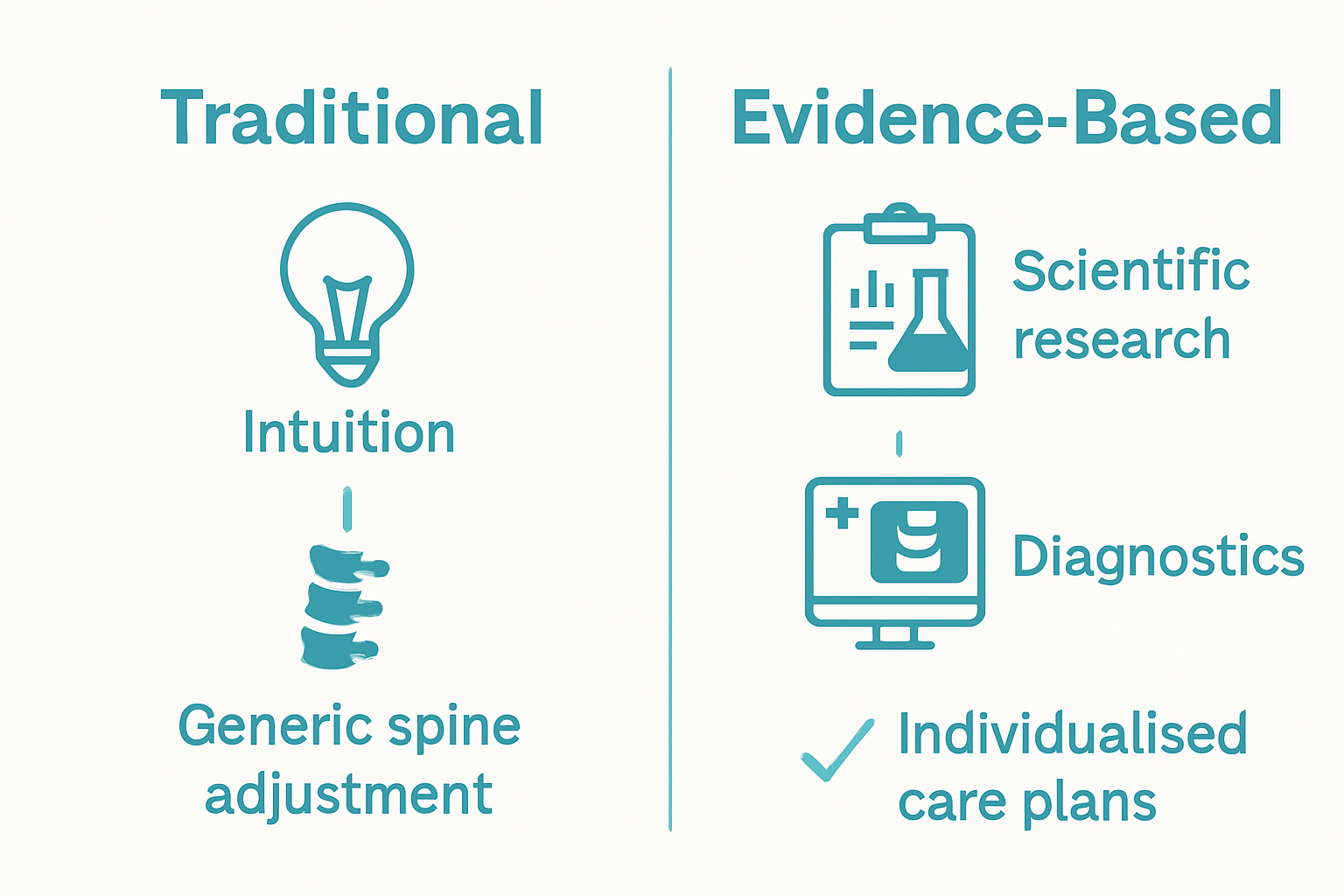
Practical implications of this shift are profound. Evidence-based chiropractors must engage in continuous professional development, critically analyse research methodologies, and maintain transparency about treatment rationales. Unlike traditional practitioners who might rely on fixed treatment models, modern chiropractors develop multilayered interventions that address root causes rather than merely managing symptoms. This approach transforms chiropractic care from a potentially subjective practice into a precise, scientifically informed healthcare discipline.
Ultimately, the evolution from traditional to evidence-based chiropractic represents a fundamental transformation in musculoskeletal healthcare. By prioritising scientific integrity, patient-centred care, and continuous learning, this approach empowers patients with transparent, measurable treatment strategies. The result is a more collaborative, effective model of care that goes beyond symptomatic relief to support comprehensive physical wellness and long-term health outcomes.
Safety, Risks and Common Misconceptions
Chiropractic myths explained reveal that safety concerns and misconceptions often stem from outdated perceptions of chiropractic care. Professional practice standards now mandate comprehensive risk assessment and patient-specific management approaches that prioritise individual safety and wellbeing. Modern evidence-based chiropractic practices have transformed the profession from anecdotal treatments to scientifically validated interventions with robust safety protocols.
Common misconceptions about chiropractic care often revolve around perceived risks of manipulation techniques. In reality, evidence-based practitioners conduct thorough pre-treatment assessments, including detailed medical histories, physical examinations, and diagnostic imaging when necessary. These comprehensive evaluations allow chiropractors to identify potential contraindications and develop personalised treatment strategies that minimise risks. Practitioners are trained to recognise when specific techniques might be inappropriate or potentially harmful, ensuring patient safety remains the paramount consideration.
While all medical interventions carry some inherent risks, chiropractic care has significantly lower complication rates compared to many traditional medical treatments. Serious adverse events are exceptionally rare, particularly when treatments are performed by registered professionals using evidence-based techniques. Patients can mitigate potential risks by selecting qualified, registered practitioners, providing complete medical histories, and maintaining open communication about their health conditions and treatment responses. The emphasis on patient-centred care means that treatment plans are continuously monitored and adjusted to ensure optimal safety and effectiveness.
Ultimately, understanding chiropractic safety requires dispelling myths and recognising the profession’s evolution towards a scientific, patient-focused healthcare discipline. By prioritising evidence-based practices, continuous professional development, and transparent patient communication, chiropractors have transformed public perceptions. The modern approach demonstrates that when performed by skilled, scientifically trained professionals, chiropractic care represents a safe, effective method of addressing musculoskeletal health and supporting overall physical wellness.
Transform Your Health with Evidence-Based Chiropractic Care
The challenge of navigating musculoskeletal pain and aiming for long-term wellness demands a precise, scientifically backed approach. This article highlights the importance of evidence-based chiropractic care that blends the latest research with personalised treatment strategies. If you want to move beyond simply managing symptoms and instead build resilience, enhance performance, and address root causes, engaging with a dedicated, expert team is crucial.
At North Fremantle Chiropractic, we understand these goals intimately. We combine elite sports chiropractic care insights with real-world strength and conditioning principles. Our hands-on, movement-based approach aligns with the article’s focus on continuous learning and patient-centred treatments, ensuring every visit is more than just treatment but real progress.

Ready to feel the difference that evidence-based practice can make in your life and performance? Visit North Fremantle Chiropractic today and let us help you rediscover comfort, resilience, and strength. Learn more about how our commitment to professional standards and personalised care sets us apart. Don’t wait until pain slows you down. Take action now and experience care designed to keep you moving and performing at your best.
Frequently Asked Questions
What is evidence-based chiropractic care?
Evidence-based chiropractic care is an advanced healthcare approach that combines scientific research, clinical expertise, and individual patient needs to provide effective and personalised treatment strategies.
How does evidence guide chiropractic treatments?
Evidence guides chiropractic treatments by ensuring that every manipulation or therapeutic recommendation is based on rigorous research and clinical understanding, leading to improved patient outcomes.
Who benefits from evidence-based chiropractic practice?
Individuals across various demographics benefit from evidence-based chiropractic practice, including athletes, office workers with postural issues, and older adults experiencing chronic musculoskeletal conditions, as it allows for tailored treatment strategies.
How does evidence-based chiropractic differ from traditional chiropractic?
Evidence-based chiropractic differs from traditional chiropractic by prioritising scientific research and patient-specific care, moving away from intuition and standardised treatments towards nuanced, individually tailored interventions.
Recommended
Comments